
Technical Bulletin: The Economic Threat of Necrotic Enteritis in Poultry Farming

Dr. Amit Janbandhu, Dr. Sanjay Singhal

1. Introduction

Necrotic enteritis (NE) is a significant burden on the poultry industry, causing gut damage that reduces nutrient utilization and productivity. Production losses due to NE and current control methods are estimated to cost the global broiler industry approximately USD 6 billion annually (Wade and Keyburn, 2015). These losses are associated with decreased production performance, mortality of up to 1% per day, treatment costs, and carcass condemnation due to cholangiohepatitis (Immerseel,et.al, 2004 & Timbermont, et.al,2011). Clinical and subclinical forms of NE have been recognized (Van Immerseel et al., 2004); the clinical form results in acute disease and bird mortality. Although flock health and productivity can be maintained using IFA-free practices (Parent et al., 2020), strong industry moves away from IFAs have increased the need for alternative approaches. Consequently, a wide range of feed additives and treatments have been investigated and commercialized to control NE.

NE is caused by Clostridium perfringens and primarily affects chickens from 2 weeks to 6 months of age. In humans, C. perfringens intoxications are the third most common bacterial foodborne disease after Salmonella and Campylobacter, with 359–2173 cases reported annually in the United States. Poultry and poultry products account for 30% of outbreaks, and 92% are traced to meat and poultry as a single identified food commodity (Grass et.al, 2013). Research into antibiotic alternatives that improve gut health and immune status has intensified; however, current alternatives are less effective than antibiotics in controlling NE. A greater understanding of C. perfringens virulence factors, NE pathogenesis, and host responses is required to develop effective control strategies and new supplements, as these aspects are not yet fully understood and remain under investigation.

2. Necrotic Enteritis

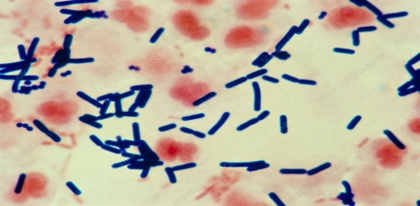
Etiology: Necrotic enteritis is caused by Clostridium perfringens, a Gram-positive, rod-shaped, anaerobic bacterium that forms oval subterminal spores. Unlike most clostridia, C. perfringens consists of relatively large, encapsulated, non-motile rods (0.6–2.4 × 1.3–9.0 µm). Colonies are smooth, round, and glistening, with an inner zone of complete hemolysis mediated by theta-toxin and an outer zone of incomplete hemolysis caused by alpha-toxin (Cato et al., 2002).

Clostridium perfringens is classified into five biotypes (A–E) based on the production of four major lethal toxins: alpha, beta, epsilon, and iota. In addition, enterotoxin (CPE) and beta2 (CPB2) toxins are considered important in enteric diseases; however, their roles in avian C. perfringens–associated enteric disease remain unclear (Crespo et al., 2007). All five types produce toxins: type A (α), type B (α, β, ε), type C (α, β), type D (α, ε), and type E (α, ι). Necrotic enteritis is primarily associated with C. perfringens types A and C caused by α and net B toxins (Fisher et al,2005)., with infections in poultry mainly caused by type A and, to a lesser extent, type C. Because type A is highly prevalent in the intestines of healthy birds, its pathogenic role remains controversial (Smedley et.al,2004). Moreover, strains isolated from NE outbreaks have not been shown to produce higher levels of alpha toxin than isolates from clinically healthy broilers.

Fig 1. Microscopic appearance of Clostridium Perfringes

Table 1: The most important C. perfringens toxins

ToxinGene locationBiological activity
Alpha toxinChromosomeCytolytic, haemolytic, dermonecrotic, Lethal
Beta toxinPlasmidCytolytic, dermonecrotic, lethal
Epsilon toxinPlasmidOedema in various organs: liver, kidney and central nervous system
Iota toxinPlasmidDisruption of actin cytoskeleton and cell barrier integrity
Beta2 toxinPlasmidCytolytic, lethal
EnterotoxinChromosome/ PlasmidCytotoxic, lethal, causes diarrhea by leakage of water and ions
Theta toxinChromosomeLyses red blood cells and modulates the host inflammatory response

(Source: Wise and Siragusa et.al, 2005)

3. Epidemiology

3.1. Source of Infection and Transmission: Clostridium perfringens is a naturally occurring bacterium in poultry production environments. It is present in dust, soil, feces, feed, poultry litter, eggshell fragments, fluff, and the intestinal tract of poultry. Feces of wild birds may also contain elevated numbers of C. perfringens, further introducing the organism into poultry facilities. Environmental sampling on poultry farms detected C. perfringens on wall swabs (53%), fan swabs (46%), fly strips (43%), dirt outside entrances (43%), and boot swabs (29%), demonstrating its ubiquitous environmental presence (Craven et.al,2001). Transmission occurs primarily via the fecal–oral route and through contaminated feed, water, housing structures, insects, and direct contact between infected and susceptible birds. During necrotic enteritis (NE) outbreaks, contaminated feed or litter are considered major sources, and contaminated feed components have also been implicated. Vertical transmission is possible, as C. perfringens has been found in the yolk sac of embryonated eggs, suggesting transmission within integrated broiler operations (Craven et.al, 2003). Additionally, C. perfringens may be transmitted mechanically and/or biologically by house flies in poultry houses, contributing to NE development (Dhillon et.al,2004).

3.2. Predisposing factors

Necrotic enteritis (NE) develops when one or more predisposing factors are present, particularly intestinal mucosal damage. Damage caused by coccidial pathogens releases growth factors that promote C. perfringens proliferation in the intestinal lumen. Broilers inoculated with Eimeria spp. and fed C. perfringens–contaminated feed show higher mortality than birds fed contaminated feed alone. Physical damage from litter eating or fibrous diets may also alter the mucosa (Williams et.al,2005).

Management factors such as feeding practices, water supply, temperature control, and ventilation contribute to NE. Delayed initial feeding impairs gut-associated lymphoid tissue development. Nutritional stress from unbalanced diets, especially low energy-to-protein ratios, increases feed intake, nitrogen levels in digesta, and susceptibility to clostridial overgrowth. Diet composition strongly influences NE. Diets rich in wheat, rye, and barley contain indigestible non-starch polysaccharides that increase digesta viscosity, slow gut transit, and favor anaerobic bacteria. Broilers fed wheat-, rye-, or barley-based contaminated diets have higher mortality than those fed corn-based diets. Pelleted diets reduce intestinal C. perfringens, whereas high-protein diets (e.g., fishmeal) and bone meal increase NE risk (Kocher et.al,2003).

Immunosuppression increases NE susceptibility. Use of Infectious bursal disease (IBD) vaccines has been associated with increased NE lesion severity, even at normal doses. Stressful conditions may further predispose birds to NE, but immunosuppression is inappropriate when evaluating vaccines (Nikpiran et.al,2008).

4. Clinical Signs and Lesions

4.1. Clinical signs:
Subclinical necrotic enteritis (SNE) shows no obvious clinical signs and is usually detected under field conditions at processing plants through carcass rejection. SNE may be suspected based on reduced weight gain, poor feed conversion efficiency, increased moisture in droppings, and wet litter, most commonly at 2–5 weeks of age without increased mortality.

Clinical necrotic enteritis (NE) typically affects broiler chicks between 2–6 weeks of age and presents with sudden onset of diarrhoea and intestinal mucosal necrosis. Affected birds are depressed, anorectic, have ruffled feathers, and tend to huddle. In advanced stages, birds become laterally recumbent, immobile, and die rapidly. The disease course is usually short, and birds are often found dead without prior clinical signs. Acute signs include severe depression, reduced appetite, reluctance to move, ruffled feathers, and diarrhoea, with illness lasting only 1–2 hours [20]. Mortality in affected flocks may range from 1% to 50%.

Birds that die of NE have a foetid odor, dehydration, dark and dry pectoral muscles, and pale kidneys. The unopened intestine is darker than normal and distended due to bile-stained contents (Long, et.al,2007)

4.2. Gross lesions:
Lesions of SNE are characterized by necrotic lesions in the intestinal wall and liver, occurring in one or more intestinal regions. Mild lesions appear as small ulcers or light-yellow spots on the mucosal surface, mainly in the jejunum and ileum and less commonly in the caeca. Severe lesions may involve membranes covering large intestinal segments, including the colorectal region and caecal tonsils. Liver abnormalities, primarily enlargement and occasional congestion, are also reported.

Clinical NE is characterized by extensive mucosal necrosis of the small intestine, covered with a yellow-brown or bile-stained pseudomembrane. Gross lesions are mainly confined to the small intestine but may also involve the liver and kidneys. At necropsy, the duodenum, jejunum, and ileum are thin-walled, friable, gas-filled, and distended with dark brown fluid. Ulcers may occur singly or in aggregates. In severe cases, a fibrino-necrotic or diphtheritic membrane covers large segments, often involving two-thirds of the jejunum and ileum (McDevitt et.al,2006).

4.3. Histopathological changes:
Microscopically, NE lesions consist of coagulative necrosis at the villous apices with a clear demarcation between necrotic and viable tissue. Degeneration may extend into the submucosa. Regeneration is characterized by epithelial proliferation, connective tissue formation, and reduced goblet, columnar, and epithelial cells, resulting in short, flattened villi with reduced absorptive surface. The pseudomembrane consists of necrotic villi, inflammatory cells, and bacterial aggregates (Olkowski et.al.2008).

Fig. 2. Gross pathological changes in NE: A. Jejunum of a bird showing ballooning. B. Jejunum showing small blackish necrotic spots. C. Jejunum showing Turkish towel appearance. D. Duodenum showing congestion.

5. Pathogenesis

Pathogenesis describes the complex and dynamic host–pathogen interactions at the molecular level and is essential for developing effective control measures. Bacterial pathogenesis involves six overlapping phases: colonization, growth and proliferation, nutrient acquisition, evasion of host defenses, host tissue injury, and transmission. In rapidly growing pathogens such as Clostridium perfringens, these phases occur almost simultaneously.

Colonization requires degradation of the intestinal mucus layer, which normally acts as a physical barrier. Intestinal mucins provide binding sites for bacterial adhesins, and pathogenic C. perfringens secrete bacteriocins (perfrins) that displace commensal Clostridium species. The organism produces glycoside hydrolases and chitinases that degrade mucins, providing nutrients and enabling microcolony formation on the mucosa. Predisposing factors such as Eimeria infection stimulate inflammation, increased mucin production, and release of essential amino acids, all of which enhance C. perfringens growth and colonization (Collier et.al,2008).

Once a threshold density is reached, an Agr-like quorum-sensing system activates the VirS–VirR regulatory system and virulence genes, including NELoc-1 involved in adhesion. Degradation of the mucus layer allows pore-forming toxins to access epithelial cells. Proteolytic and collagenolytic enzymes damage the epithelium, disrupt intercellular junctions, spread through the lamina propria, and cause epithelial necrosis and sloughing. Quorum-sensing–regulated secretion of alpha toxin and perfringolysin promotes biofilm formation on the exposed submucosa, enhancing bacterial persistence and protection from host immunity and antibiotics.

Intestinal integrity depends on tight junctions, particularly claudin-3 and claudin-4, which serve as receptors for C. perfringens enterotoxin (CPE). CPE binding forms small complexes that oligomerize into large CH1 complexes, leading to pore formation in the cell membrane. These pores allow calcium influx, resulting in epithelial cell death (Chakrabarti, et.al,2005).

Gross lesions of necrotic enteritis primarily affect the jejunum and ileum, with occasional involvement of the duodenum and ceca. The intestine is thin, friable, gas-distended, and covered by a tan orange pseudomembrane, producing the characteristic “dirty Turkish towel” appearance. Pseudomembrane formation is most common in the jejunum. Subclinical necrotic enteritis is associated with hepatitis or cholangiohepatitis and gall bladder distension with flocculent material. Bile acids promote sporulation and enterotoxin production by C. perfringens, explaining the higher lesion frequency in the upper small intestine, particularly the duodenum and jejunum (Park et.al,2018).

Fig.3. Pathogenesis of necrotic enteritis in broiler chickens causes destruction of epithelial cells of intestine that leads to blood-stained diarrhea.

6. Feed Additives Used to Control Necrotic Enteritis

A wide range of feed additives has been studied for their effects on necrotic enteritis (NE). Most commercial additives do not target Clostridium perfringens directly but improve gut health, microbiota balance, and immune competence, often with overlapping and interconnected effects (Granstad et al., 2020). Short-chain fatty acids, particularly butyrate, provide energy to enterocytes and support beneficial microbiota. Butyrate can be supplied directly in protected form or indirectly via prebiotics, probiotics, phytobiotics, or postbiotics (Liu et al., 2021). Combinations of additives, such as fatty acids with phytobiotics, are often more effective.

Probiotics, including single or multi-strain bacteria, yeasts, or cultured cecal microbiota, can directly inhibit C. perfringens, compete for gut niches, improve microbiota composition, gut integrity, or immune function. Prebiotics, fatty acids, and phytobiotics have also been reviewed for general health and NE-specific applications (Gomez-Osorio et al., 2021).

Novel approaches include bacteriophages and their endolysins, which specifically target C. perfringens, and bacteriocins produced by bacteria for antimicrobial effects. Passive immunization using egg yolk antibodies or engineered single-chain antibodies has shown potential in reducing NE ( Gangaiah et al., 2022).

Commercial feed supplements such as StalBMD (BMD), Magnox (lincomycin), and Stalgro (enramycin) by Stallen South Asia Pvt. Ltd are also used to prevent NE caused by C. perfringens.

7) Mechanism of Action

7.1) Bacitracin Methylene Disalicylate (BMD)

Bacitracin Methylene Disalicylate (BMD) is a polypeptide antibiotic used to prevent and treat Gram-positive bacterial infections. It inhibits bacterial cell wall synthesis by blocking dephosphorylation of bactoprenol phosphate, preventing peptidoglycan transport. This disrupts cell wall formation, causing bacterial lysis. BMD is bactericidal, particularly against actively dividing Staphylococcus and Streptococcus species.

Fig.4. Bactericidal effect on growing bacteria.

7.2) Lincomycin Hydrochloride

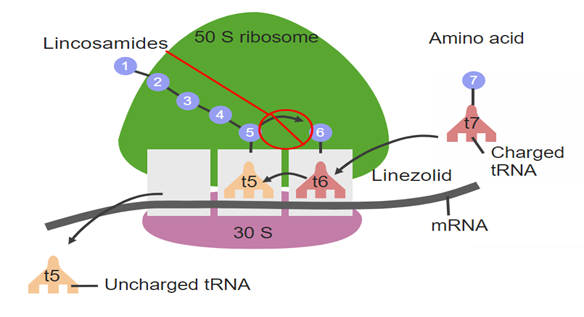
Lincomycin hydrochloride, a lincosamide antibiotic derived from Streptomyces lincolnensis, is used against Gram-positive and some anaerobic bacteria. Its primary mechanism is inhibition of bacterial protein synthesis by binding to the 50S ribosomal subunit, specifically at the peptidyl transferase center. This blocks the ribosomal exit tunnel, preventing elongation of polypeptide chains and halting protein synthesis, which stops bacterial growth and replication. Lincomycin may also have a secondary effect on bacterial cell wall synthesis, enhancing its overall antibacterial activity.

Fig 5. Protein synthesis inhibition within bacterial cells.

7.3. Enramycin

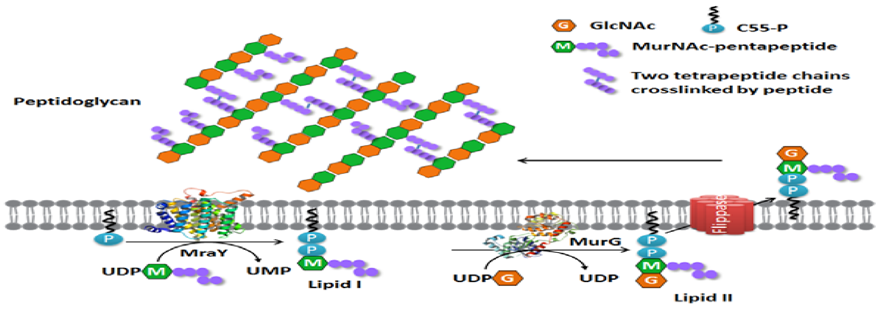
Enramycin acts as an inhibitor of the enzyme (MurG), which is essntial for wall biosynthesis in gram +ve bacteria. MurG catalyzes the tranglycosylation reaction in the last step of peptidoglycan biosynthesis. Hence inhibiting this step greatly compromises cell wall integrity leading to cell lysis.

Figure 6. Membrane steps of the bacterial peptidoglycan synthesis pathway.

References

 Experimental induction of necrotic enteritis inbroiler chickens by Clostridium perfringens isolates from the outbreaks in Iran. Journal of Veterinary Research,2008, 63: 127-132.

 Cato, P., L. George and M. Finegold, 2002. Genus c l o s t r i d i u m . B e r g e y ‘ s m a n u a l o f systematicbacteriology, USA., 2: 1141-1200.

Chakrabarti, G.; McClane, B.A. The importance of calcium influx, calpain and calmodulin for the activation of CaCo-2 cell death pathways by Clostridium perfringens enterotoxin. Cell. Microbiol. 2005, 7, 129–146. [PubMed].

Collier, C.T.; Hofacre, C.L.; Payne, A.M.; Anderson, D.B.; Kaiser, P.; Mackie, R.I.; Gaskins, H.R. Coccidia-induced mucogenesis promotes the onset of necrotic enteritis by supporting Clostridium perfringens growth. Vet. Immunol. Immunopathol. 2008, 122, 104–115. [CrossRef].

Craven, E., A. Cox, S. Bailey and E. Cosby, 2003. Incidence and tracking of Clostridium perfringensthrough an integrated broiler chicken operation.Avian Diseases, 47(3): 707-711.

Craven, E., J. Stern, S. Bailey and A. Cox, 2001. Incidence of Clostridium Perfringens in broiler chickens and their environment during production and Processing. Avian Diseases, 45: 887-896.

Crespo, R., J. Fisher, L. Shivaprasad, E. Fernández Miyakawaand A. Uzal, 2007. Toxinotypes of Clostridium perfringens isolated from sick and healthy avian species. Journal of Veterinary Diagnostic Investigation, 19(3): 329-333.

Dhillon, S., P. Roy, L. Lauerman, D. Schaberg, S.Weber, D. Bandli and F. Wier, 2004. High mortality in egg layers as a result of necrotic enteritis. Avian Diseases, 48(3): 675-680.

Fisher, J., K. Miyamoto, B. Harrison, S. Akimoto, R. Sarker and A. McClane, 2005.Association of beta2 toxin production with Clostridium perfringens type A human gastrointestinal disease isolates carrying a plasmid enterotoxin gene. Molecular Microbiology, 56(3): 747-62.

Gangaiah D, Ryan V, Van Hoesel D, Mane SP, Mckinley ET, Lakshmanan N, et al. Recombinant Limosilactobacillus (Lactobacillus) delivering nanobodies against Clostridium perfringens NetB and alpha toxin confers potential protection from necrotic enteritis. Microbiologyopen 2022;11: e1270. https://doi.org/10.1002/ mbo3.1270.

Gomez-Osorio L-M, Yepes-Medina V, Ballou A, Parini M, Angel R. Short and medium chain fatty acids and their derivatives as a natural strategy in the control of necrotic enteritis and microbial homeostasis in broiler chickens. Front Vet Sci 2021; 8:773372. https://doi.org/10.3389/fvets.2021.773372.

Granstad S, Kristoffersen AB, Benestad SL, Sjurseth SK, David B, Sørensen L, et al. Effect of feed additives as alternatives to in-feed antimicrobials on production performance and intestinal Clostridium perfringens counts in broiler chickens. Animals 2020; 10:240. https://doi.org/10.3390/ani10020240.

 Grass, J.E.; Gould, L.H.; Mahon, B.E. Epidemiology of foodborne disease outbreaks caused by Clostridium perfringens, United States, 1998–2010. Foodborne Pathog. Dis. 2013, 10, 131–136. [CrossRef] [PubMed].

 Immerseel, F.V.; Buck, J.D.; Pasmans, F.; Huyghebaert, G.; Haesebrouck, F.; Ducatelle, R. Clostridium perfringens in poultry: An emerging threat for animal and public health. Avian Pathol. 2004, 33, 537–549. [CrossRef] [PubMed].

Kocher, A., 2003. Nutritional manipulation of necrotic enteritis outbreak in broilers. Recent Advances in Animal Nutrition in Australia,14: 111-116.

Liu L, Li Q, Yang Y, Guo A. Biological function of short-chain fatty acids and its regulation on intestinal health of poultry. Front Vet Sci 2021; 8:736739. https:// doi.org/10.3389/fvets.2021.736739.

Long, R., A. Barnum and R. Pettit, 2007. Necrotic enteritis in broiler chickens. Pathology and proposed pathogenesis. Canadian Journal of Comparative Medicine, 38(4): 467-474.

McDevitt, M., D. Brooker, T. Acamovic and C. Sparks, 2006. Necrotic enteritis; a continuing challenge for the poultry industry. World’s Poultry Science Journal, 62(02): 221-247.

Nikpiran, H., B. Shojadoost and M. Peighambari, Olkowski, A., C. Wojnarowicz, M. Chirino-Trejo,B. Laarveld and G. Sawicki, 2008. Sub-clinical necrotic enteritis in broiler chickens: novel etiological consideration based on ultra- structural and molecular changes in the intestinal tissue. Research in Veterinary Science, 85(3): 543-553.

Parent E, Archambault M, Moore RJ, Boulianne M. Impacts of antibiotic reduction strategies on zootechnical performances, health control, and Eimeria spp. excretion compared with conventional antibiotic programs in commercial broiler chicken flocks. Poult Sci 2020; 99:4303e13. https://doi.org/10.1016/ j.psj.2020.05.037.

Park, M.; Rafii, F. Effects of bile acids and nisin on the production of enterotoxin by Clostridium perfringens in a nutrient-rich medium. Int. J. Microbiol. 2018, 2018, 7276523. [CrossRef].

Smedley Iii, G., J. Fisher, S. Sayeed, G.  and A. McClane, 2004. The enteric toxins of Clostridium perfringens. In Reviews of physiology, biochemistry and pharmacology. Springer Berlin Heidelberg, 152: 183-204.

Timbermont, L.; Haesebrouck, F.; Ducatelle, R.; Van Immerseel, F. Necrotic enteritis in broilers: An updated review on the pathogenesis. Avian Pathol. 2011, 40, 341–347. [CrossRef] [PubMed].

Wade B, Keyburn A. The true cost of necrotic enteritis.World Poultry 2015;31:16e7.

Williams, B., 2005. Intercurrent coccidiosis and necrotic enteritis of chickens: rational, integrated disease management by maintenance of gut integrity. Avian Pathology, 34(3): 159-180.

Wise, G. and R. Siragusa, 2005. Quantitative Detection of Clostridium perfringens in the Fowl Gastrointestinal Tract by Real-Time PCR. Applied Environmental Microbiology, 71: 3911-3916.

Technical Bulletin: From Farm to Fork: Managing Salmonella in Poultry — Risk, Diagnosis and Vaccination

Global Poultry Scenario

Salmonella in poultry is one of the major important reasons of production losses through mortality, morbidity and reduced efficiency, with broilers showing the highest prevalence due to intensive farming. In India, where the poultry sector contributes ₹1.3 lakh crore to GDP and supports millions of livelihoods, Salmonella causes losses of up to ₹25,000 crore annually, particularly affecting small-scale farmers (Dhruv et al., 2025).

Predominant serovars such as S. Gallinarum, S. Enteritidis and S. Typhimurium continue to threaten both flock health and food safety, with contamination documented across farms, processing facilities and retail products. According to a global review, the median prevalence of Salmonella was 40.5% in broiler chickens, 30% in raw chicken meat and 40% in eggs and laying hens. Multidrug resistance was found in 97.8% of processing/market studies and 91.1% of farm studies, indicating the presence of resistant reservoirs throughout the supply chain (Castro‑Vargas et al., 2020).

In India, major serovars include S. Gallinarum and S. Pullorum, which cause poultry diseases, alongside foodborne serovars like S. Enteritidis and S. Typhimurium that pose risks to consumers. These infections result in both direct production losses and broader food safety concerns, threatening India’s export growth and domestic confidence. Considering poultry’s role as the most affordable protein source for India’s population and its growing role in international trade, effective Salmonella control through surveillance, vaccination, biosecurity and processing-stage interventions is essential to protect public health, economic sustainability and food security.

Predisposing Factors and Disease Transmission:

Predisposing factors are the factors which are the loop holes or common ignored mistakes on farm which can be harmful as the birds are in continuous dangers because of common pathogens which are always present around them, therefore proper sanitation and biosecurity measures are advised according to the farm type and season to prevent this kind of factor at every step.

Common predisposing factors are:

  • Poor hatchery hygiene – contaminated eggs, incubators and hatchery equipment
  • Vertical transmission – infected breeder flocks passing bacteria through the egg
  • Environmental contamination – dirty litter, contaminated water and feed
  • Rodents, wild birds, insects – act as reservoirs and mechanical carriers
  • Overcrowding and poor ventilation – stress increases susceptibility
  • Inadequate biosecurity – uncontrolled farm access, movement of people/vehicles
  • Stress factors – vaccination, transport, feed change, heat stress
  • Concurrent infections – immunosuppression from IBD, ND, or any other pre-existing factor.

As these are the factors which provide window to the transmission of Salmonella in poultry farms, therefore proper management of these predisposing factors along with immunization of birds will provide maximum protection from such kind of disease transmission.

Transmission:

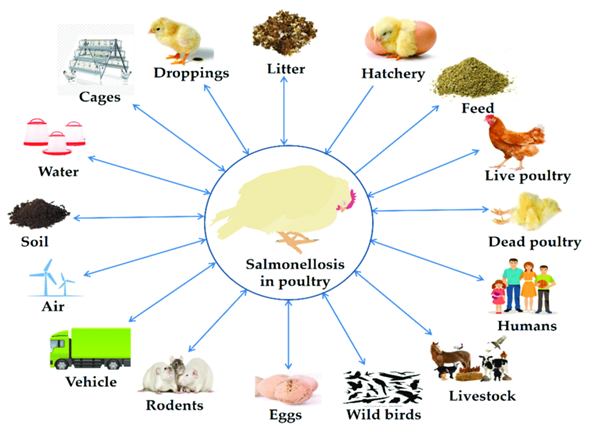
Various modes of transmission in poultry are- through vertical transmission from infected breeders to eggs, horizontal transmission via contaminated feed, water, litter, equipment and vectors and last but not least cross-contamination during processing, making it a persistent farm-to-fork threat.

Modes of Transmission:

  1. Vertical Transmission (Transovarian)
    • From infected hens to chicks via eggs
    • Important for S. Pullorum and S. Gallinarum
  2. Horizontal Transmission
    • Faecal–oral route: ingestion of contaminated feed, water or litter
    • Direct bird-to-bird contact
    • Mechanical vectors: rodents, flies, beetles and wild birds
    • Farm equipment, boots, vehicles spreading contamination
  3. During Processing and Marketing
    • Cross-contamination during slaughter, defeathering, evisceration
    • Contaminated meat and eggs → foodborne infections in humans

Fig. 1. Modes of transmission of Salmonella

Pathogenesis:

Once ingested by bird, Salmonella colonizes the gastrointestinal tract, particularly the ceca, where its fimbriae, flagella and adhesins enable attachment to the mucosal surface and biofilm formation enhances persistence. It then starts replication in the ceca and establishes a persistent reservoir for faecal shedding. Because the host-adapted serovars like S. Gallinarum and S. Pullorum survive inside macrophages and do not have flagella, they are able to avoid innate immunity and spread throughout the body through the circulation to the liver, spleen, bone marrow and reproductive organs.

In laying hens, colonization of ovaries and oviducts results in trans-ovarian egg contamination, a major food safety concern. Even if the host mounts an innate immune response involving heterophils, macrophages and inflammatory cytokines, followed by adaptive immunity with humoral (IgA, Ig Y) and cell-mediated responses, but clearance is often incomplete, leading to asymptomatic carriers that shed Salmonella intermittently in faeces. Clinical manifestations are most severe in young or immunocompromised birds, resulting in septicaemia, diarrhoea and mortality, while older birds often remain subclinical carriers with minimal lesions.

Pathological changes in acute infections may include enteritis, caecal core formation and necrotic foci in liver and spleen. Thus, the pathogenesis of Salmonella in poultry follows a cycle of ingestion, intestinal colonization, epithelial invasion, intracellular survival, systemic spread, and persistence, with significant consequences for flock health, vertical transmission and zoonotic risk to humans through contaminated poultry products. Hence making it as a dual threat for both poultry health and food safety.

Clinical Signs and Post Mortem lesions:

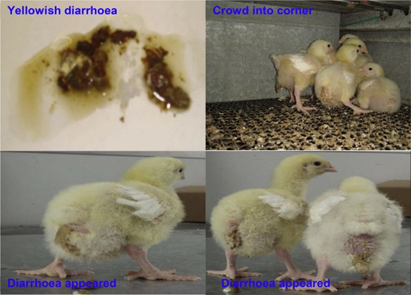
S. pullorum primarily affects chicks aged 1–3 weeks, causing sudden high mortality, white pasty diarrhoea (pasty butt), weakness, huddling and yolk sac infections, while survivors may develop arthritis and become chronic carriers shedding the organism in eggs and faeces.

While S. gallinarum affects growers and adult birds, producing high fever, anorexia, drooping posture, bronze or darkened combs and wattles, profuse brown-green diarrhoea, swollen necrotic livers and spleens and marked drops in egg production; chronic cases may show milder diarrhoea and shell defects. Key differentiators are age susceptibility (chicks vs adults), faecal colour, presence of arthritis in pullorum disease and severe reproductive impacts in fowl typhoid.  

Most common clinical findings:

  • Vent paste.
  • Ruffled feathers.
  • Intestinal haemorrhages.
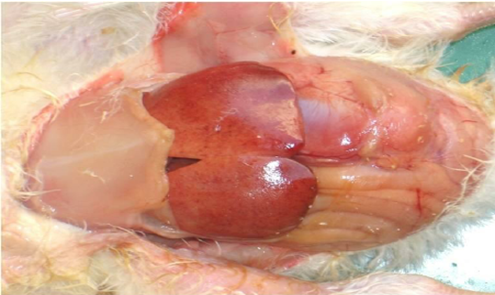
  • Bronze discoloration of liver.
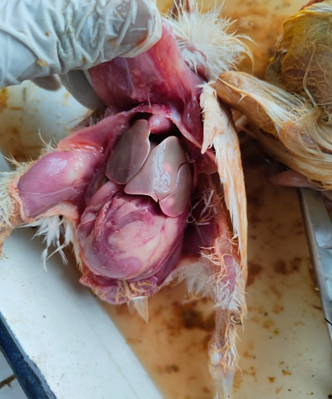
  •  Elevated white nodular on ventricles.
  • Prominent necrotic foci on liver.
  • Hepatomegaly.

Post-mortem lesions of Salmonella in poultry are characteristic and vary with age and disease type. In Fowl Typhoid (caused by S. Gallinarum), the liver becomes enlarged, friable and bronze in colour, often seen with necrotic foci, while the spleen and kidneys are swollen and congested. The heart shows petechial haemorrhages and intestines display catarrhal to haemorrhagic enteritis, sometimes with button-like ulcers in chronic cases. In Pullorum Disease (caused by S. Pullorum), chicks show white necrotic foci in the liver, spleen and lungs, caecal cores, enlarged pale kidneys and unabsorbed yolk sacs. In older birds, lesions include caseous oophoritis, salpingitis and peritonitis. These lesions highlight the septicaemic nature of Salmonella, leading to systemic organ damage and reproductive losses in poultry.

Fig 2. Necrotic foci on liver, in chicken

Fig. 3: Vent paste, diarrhoea and huddling in chicks.

Fig. 4: Bronze discolouration of liver   

Fig. 5: Congested ovarian follicles

Diagnosis:

Although many carriers exhibit no symptoms, the first step in diagnosing Salmonella in poultry is to look for clinical indicators and post mortem lesions.

Diagnosis should be based on:

  1. Flock history
  2. Clinical signs
  3. PM lesions
  4. Laboratory confirmation

Affected birds often show depression, ruffled feathers, white diarrhea with pasted vents, reduced egg production, and high mortality, especially in chicks. Post-mortem examination typically reveals hepatomegaly with bronze discoloration and necrotic foci, splenomegaly, nephritis, cecal cores, and yolk sacculitis. Definitive diagnosis requires bacteriological culture from liver, spleen, bile, or cecal contents using enrichment broths and selective agars, supported by biochemical tests. Rapid plate agglutination tests are commonly used for flock screening, while molecular methods like PCR and ELISA provide sensitive and specific detection of Salmonella. Also, NPIP protocols detail validated sampling methods (drag/manure swabs, cloacal swabs, hatchery debris), culture workflows and confirmatory testing through biochemical and serological ID (9 C.F.R.) This integrated algorithm ensures early detection, regulatory compliance and reduced Salmonella transmission across poultry systems.  

Treatment and Drug Resistance:

Antibiotics are primarily used to treat Salmonella infections in chickens in order to lower mortality and clinical illness; because carrier states persist, total eradication of the bacteria is rarely possible. Among commonly used medications include aminoglycosides, sulphonamides with trimethoprim, tetracyclines and fluoroquinolones. Probiotics, vitamins and electrolytes used in supportive therapy aid in gut health and recuperation. However, Salmonella has developed antimicrobial resistance (AMR) as a result of the overuse and abuse of antibiotics in chicken farming.Alarmingly, many isolates demonstrate multi-drug resistance, complicating treatment options for both poultry and human infections (Das et al., 2023)

These challenges create major public health risks and economic burdens, underscoring the urgent need for integrated control strategies. Vaccination of breeder and layer flocks—using live-attenuated and killed vaccines—has proven highly effective in reducing colonization, shedding, vertical transmission and cross-serovar infections, thereby lowering environmental contamination. Therefore, effective control of Salmonella in poultry with combined use of strict biosecurity and strategic vaccination, can fully prevent infection with less or no use of excess antibiotics. Even effective vaccination can reduce mortality, also egg and meat contamination and decreases reliance on antibiotics.

Prevention and control:

Salmonella control in poultry relies on a multifaceted strategy that integrates strict biosecurity, environmental hygiene, hatchery and egg sanitation, prudent antimicrobial use and continuous monitoring, with vaccination serving as a cornerstone. Rigorous access control, pest management, litter and water sanitation and hatchery hygiene help minimize pathogen entry and spread, while surveillance using culture, serology and molecular diagnostics ensures early detection and program adjustment. Antimicrobial stewardship reduces resistance risks and alternatives like probiotics support gut health. Above all, live and killed vaccines, tailored to local serovars, not only reduce intestinal colonization and vertical transmission but also complement other measures to sustainably lower Salmonella prevalence, protect food safety and safeguard public health.

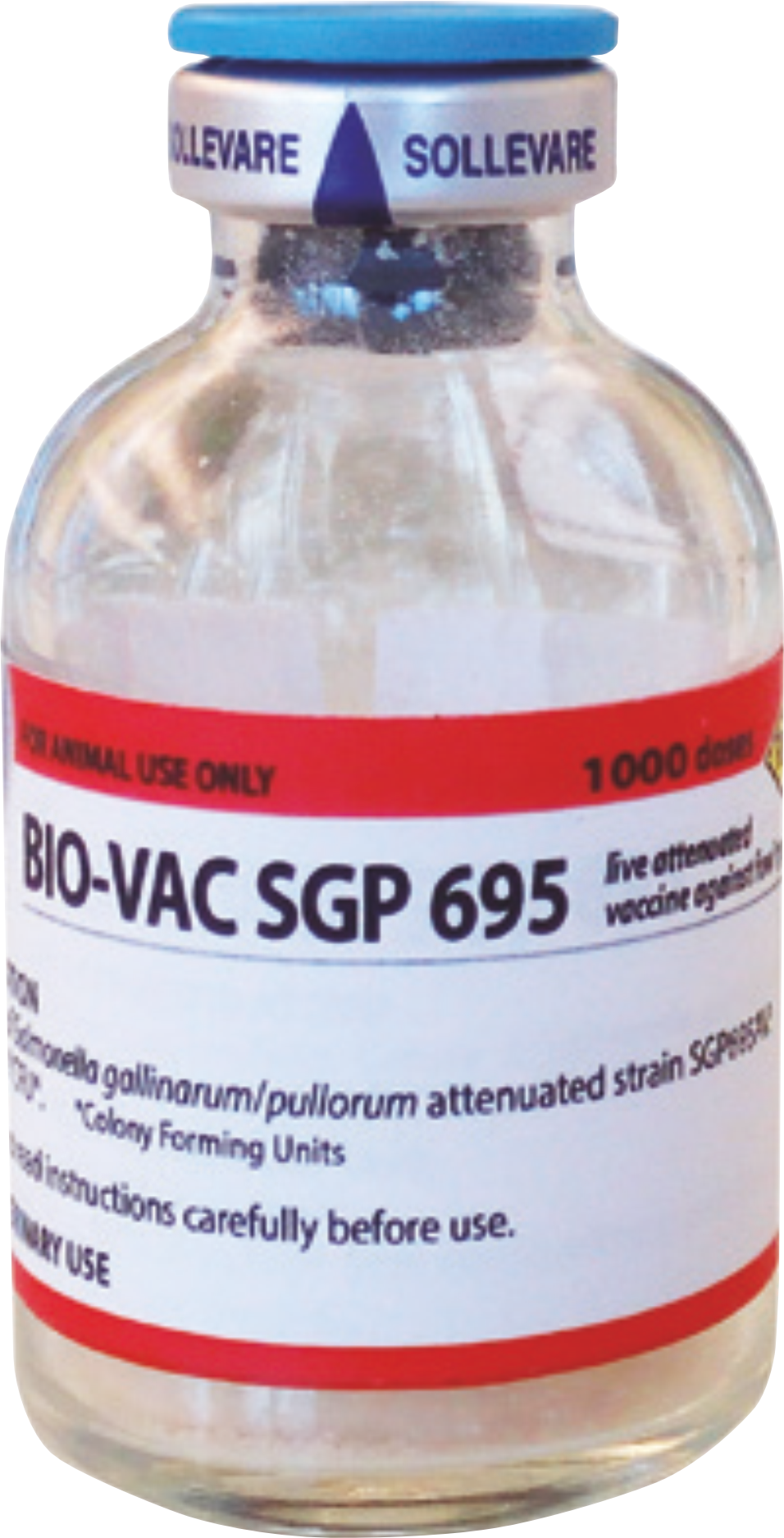
Stallen South Asia Pvt. Ltd. Is offering unique live vaccine BIO-VAC SGPN 695 against fowl typhoid and Salmonella enteritidis.

Key Features of BIO-VAC SGP 695:

  • Live-attenuated dual‐serovar vaccine: BIO-VAC SGP 695 uses a stable, non-reverting Salmonella gallinarum/pullorum strain to protect pullets against both fowl typhoid and pullorum disease, while also reducing Salmonella enteritidis colonization in the gut.
  • Oral, water-based delivery: The freeze-dried vaccine is easily reconstituted and administered via drinking water, ensuring uniform uptake across large flocks without injections and stress.
  • Rapid, durable immunity: Two doses elicit strong protective responses leading to lower mortality, milder clinical signs and stabilized egg production.
  • Cost-effective and field-stable: Bulk reconstitution lowers per-dose handling and labour costs, and the strain remains apathogenic under farm conditions without interfering with other vaccination programs.
FeatureBIO-VAC SGP 695SG 9R
Targeted infectionsSalmonella gallinarum, Salmonella pullorum, Salmonella EnteritidisPrimarily Salmonella gallinarum (Fowl Typhoid)
CharacterisationStable attenuation, non-reverting; safe in pulletsPossible reversion
AdministrationOral via drinking water (no handling stress, flock-wide coverage)Injection (subcutaneous/intramuscular) labour intensive, stressful
Vaccination program2-dose pullet program: 6–8 weeks & 16–18 weeksMultiple injections required; less practical in large flocks
EfficacyStrong systemic & mucosal immunity; reduces colonization, shedding and mortalityInconsistent field efficacy; does not prevent shedding fully
Field advantagesEasy mass application, safer profile, compatible with biosecurity programsHigher labour cost, handling stress, potential post-vaccination reactions

Table No. 1.: Comparison of SGP 695 and SG 9R

  • One dose of vaccine contains: Cultures of S. gallinarum/pullorum attenuated strain SGP 695 AV: min. 2×10⁸ CFU.
  • Able to stimulate a rapid and long-lasting immune response.

Field trial results of BIO VAC SGP 695:

Fig. 3: ELISA report of BIO-VAC SGP  695 and SG 9R vaccine

  • Difference between SET-VAC and BIO-VAC SGP 695:
  • Live attenuated vaccines:
  • Are typically used in layer flocks.
  • Induction of both humoral immunity (B cells) and cell-mediated immunity (T-cells).
  • Inactivated vaccines:
  • More commonly used in breeder flocks.
  • Induce strong antibody responses.
 SET VACBIO-VAC SGP 695
TypeInactivatedLive
StrainS. enteritidis and S. typhimuriumS.gallinarum, S.pullorum, S. enteritidis
AdministrationSubcutaneous injectionOral (via drinking water)
Vaccination ProgramInitial dose at 6-8 weeks, second at 14-16 weeks.Initial dose at 6-8 weeks, second at 16-18 weeks. Early dose if early infection history.
  • ADMINISTRATION AND DOSAGE:
    • In drinking water not before the age of 7 days.
    • For pullet vaccination at 6-8 weeks of age followed by a second vaccination at 16-18 weeks of age.
    • Additional vaccination: 7-10 days old if severe infection or history of early infection, Ideal for pullets before ovulation. Safe for laying hens
  • NOTE:
    • Make sure that there are no antiseptic or disinfectant agents in the water used for dilution.
    • Make sure that all birds drink the vaccine suspension within 2 hours.
    • After dissolving in water, it should be used within 2 hours.
  • STORAGE:
    • Store in the refrigerator between +2° C and +8° C.
  • DOSES PER PACK:
    • 1000 doses per vial.

References:

  1. 9 C.F.R.  145.14 (2025). https://www.ecfr.gov/current/title-9/chapter-I/subchapter-G/part-145/subpart-A/section-145.14
  2. Castro‑Vargas, R. E., Herrera‑Sánchez M. P., Rodríguez‑Hernández R. and Rondón‑Barragán I. S. (2020). Antibiotic resistance in Salmonella spp. isolated from poultry: A global overview. Veterinary World, 13(10): 2070–2084. https://doi.org/10.14202/vetworld.2020.2070-2084
  3. Das, A. et al. (2023). Antimicrobial resistance in Salmonella isolates from Indian poultry: a systematic review. Frontiers in Microbiology, 14: 10920579.
  4. Gaur D., Kukreti D., Ahuja S., Kumar S. and Singh A. (2025). Poultry diseases rising concern in India. International Research Journal of Modernization in Engineering Technology and Science, 7(4): 8510–8513. https://doi.org/10.56726/IRJMETS74074.

Technical Bulletin: Efficacy of Phytogic on the performance of commercial broilers under field conditions.

Dr. Amit Janbandhu, Dr. Sanjay Singhal

Abstract

The progressive ban on in-feed antibiotic growth promoters (AGPs) has accelerated the need for efficacious phytogenic alternatives capable of sustaining growth and intestinal health in modern broiler production. PHYTOGIC, a standardized phytogenic formulation derived from Macleaya cordata extract and enriched with benzylisoquinoline alkaloids (primarily sanguinarine and chelerythrine), exhibits potent antimicrobial and anti-inflammatory activity, including suppression of the HMGB1–TLR4–NF-κB axis. This field study investigated the effects of dietary PHYTOGIC on growth performance of commercial Vencobb 430 broilers raised on deep litter under high ambient temperature stress (42–45 °C). A total of 36,000 chicks were allocated to two treatments: a basal diet (T1) and the basal diet supplemented with PHYTOGIC at 150 g/ton (T2). Performance indicators, including body weight, feed intake (FI), feed conversion ratio (FCR), corrected FCR (CFCR), and mortality, were monitored over a 42-day production cycle. PHYTOGIC supplementation significantly improved final body weight (2291 g vs. 2110 g; +8.22%) and feed efficiency (FCR: 1.75 vs. 1.80; CFCR: 1.67 vs. 1.77), accompanied by a moderate increase in FI (+5.50%). Mortality remained statistically comparable between groups, indicating no detrimental physiological effects. These results demonstrate that PHYTOGIC enhances nutrient utilization and growth performance under challenging production conditions, supporting its potential as a viable phytogenic replacement for AGPs in commercial broiler systems.

Introduction

The abuse of antibiotic growth promoters (AGPs) in feed has led to drug resistance and ecological damage would threaten human health eventually. Natural plants have become a hotspot in the research and application of substituting AGPs because of their advantages of safety, efficiency, and availability (Songchang et.al.2021).

Necrotic enteritis (NE), an enterotoxemic disease in poultry, is primarily caused by Clostridium perfringens. The restriction or ban of in-feed antibiotics in regions such as the European Union and China has contributed to a resurgence of NE cases (Shojadoost et.al.2012). The disease is particularly severe in young broilers, with acute mortality rates reaching up to 50%. NE is associated with a significant upregulation of pro-inflammatory cytokines and chemokines, contributing to systemic immune activation (Lee et.al.2011). As inflammation is metabolically demanding, immune challenges can increase the resting metabolic rate of animals by 8–27%, thereby diverting energy from growth and maintenance processes (Martin et.al.2003).

Inflammation in poultry reduces feed intake, disrupts intestinal morphology, limits nutrient absorption, and redirects energy to immune responses, collectively impairing growth and causing intestinal damage and economic losses (Klasing et.al.1987). Necrotic enteritis (NE) aggravates these effects by inducing gut microbiota dysbiosis, marked by reduced diversity, instability, and enrichment of pro-inflammatory bacteria, which compromise intestinal homeostasis and enhance pathogen persistence (Satokari et.al.2015).

The gut microbiota is the largest symbiotic ecosystem in hosts and has been shown to play an important role in maintaining intestinal homeostasis. Changes in the gut microbiota can confer resistance to pathogenic bacteria or promote infection in a host. A symbiotic microbiome regulates the maturation of the mucosal immune system, while a pathogenic microbiome can cause immune dysfunction in the host, leading to the development of diseases such as intestinal inflammation (Shi et.al, 2017).

 Pathogenic bacteria use microbiota-derived carbon and nitrogen sources as nutrients and regulatory signals to promote their own growth and virulence. By inducing inflammation, these bacteria alter the gut environment and use a unique respiratory and metal acquisition system to drive their expansion (Baumler et.al,2016).

Macleaya cordata is a perennial herb widely distributed in southern China and traditionally used in herbal medicine. Its extract (MCE), which contains bioactive alkaloids such as sanguinarine and chelerythrine, was approved as a feed additive in the EU in 2004. Sanguinarine, the major active compound, has demonstrated antitumor (Fu.et.al.2018), immunomodulatory (Kumar et.al.2014), antibacterial (Hamoud et.al.2014), anti-inflammatory (Xue et.al.2017), and insecticidal (Li et.al.2017) properties.

Several investigators have reported that MCE diets could ameliorate production performance, improve gut health and body immunity, and promote growth (Bojjireddy et al., 2013Khadem et al., 2014). Besides, sanguinarine is the major active ingredient of M. cordata, which has been found to have anti-inflammatory activity (Niu et al.2012), inhibit the activation of NF-κB, and regulate inflammatory response (Wullaert et. al.2011). Gradually, it evoked attention as a substitute of antibiotics (Kim et al.2012). Although sanguinarine is poisonous, an average daily oral dose of alkaloids of up to 5 mg/kg animal body weight has been proven safe (Kosina et al., 2004).

MCE has been reported to modulate intestinal microbiota, particularly in the upper gastrointestinal tract. It promotes beneficial bacteria such as Lactobacillus, inhibits Escherichia coli colonization, and stimulates amino acid, vitamin, and bile acid biosynthetic pathways, while minimizing the risk of antibiotic resistance gene accumulation (Huang et.al.2018).  While MCE’s beneficial effects on broiler performance, intestinal integrity, and inflammation have been demonstrated, its impact on humoral immune function and microbiota-mediated amelioration of NE remains insufficiently characterized (Bui et.al.2015).

Dietary supplementation with 100 mg/kg MCE significantly increased the diversity of the microbiota in the ileum of Snowy Peak blackbone chickens, and 200 mg/kg MCE significantly increased the relative abundance of Lactobacillus and Aeriscardovia in the ileum, increased the relative abundance of Bacteroidetes and Deferribacteres in the cecum, and decreased the relative abundance of Firmicutes in the cecum (Guo et.al, 2021).

Mechanism of action Macleaya Cordata Extract in poultry gut

1. Inhibition of HMGB1 release and function

HMGB1 is a nuclear protein that acts as a damage-associated molecular pattern (DAMP) molecule when released from necrotic cells or actively secreted by immune cells. Sanguinarine can interfere with HMGB1’s pro-inflammatory activity in the following ways:

Preventing translocation: Sanguinarine may inhibit the translocation of HMGB1 from the nucleus to the cytoplasm, thereby reducing its extracellular concentration where it acts as an inflammatory mediator.

Direct antagonism: HMGB1 has two binding domains, the A-box and B-box, which interact with various receptors to cause inflammation. Studies show that the HMGB1 A-box can act as an antagonist by competing with full-length HMGB1 for binding sites on TLR4. It’s plausible that sanguinarine may interfere with the binding of the active HMGB1 B-box to its receptor.

2. Interference with TLR4 signaling

TLR4 is a receptor on immune cells that detects inflammatory signals, including extracellular HMGB1. Sanguinarine has been shown to suppress the TLR4 signaling pathway.

Blocking ligand binding: Sanguinarine may directly interact with the TLR4 receptor complex, which includes the protein MD-2. By binding to or otherwise affecting this complex, sanguinarine could prevent the attachment of HMGB1 and other inflammatory ligands like LPS, thus inhibiting the initiation of downstream signaling.

Downregulation of TLR4 expression: Some studies suggest that sanguinarine treatment may lead to the downregulation of TLR4 protein expression on the cell surface, further limiting the cell’s ability to respond to inflammatory signals.

Fig.1.  Anti-inflammatory mechanism of Sanguinarine showing reduction of gut lesion by interference of HMGB1/ TLR4 pathway in inflammation site.

3. Suppression of the NF-κB cascade

NF-κB is a key transcription factor that regulates the expression of genes involved in inflammation. Sanguinarine potently suppresses NF-κB activation through several mechanisms.

Inhibition of IκBα phosphorylation and degradation: In resting cells, NF-κB is held inactive in the cytoplasm by its inhibitory subunit, IκBα. Upon cell activation, a kinase complex (IKK) phosphorylates IκBα, leading to its ubiquitination and degradation. Sanguinarine acts upstream of this step, blocking the phosphorylation and subsequent degradation of IκBα. This prevents NF-κB from being released.

Blocking NF-κB nuclear translocation: Because IκBα is not degraded, the NF-κB heterodimer (p65/p50) cannot translocate to the nucleus. This prevents NF-κB from binding to the promoter regions of target genes.

Modification of sulfhydryl groups: A key aspect of sanguinarine’s NF-κB inhibition is its ability to modify critical sulfhydryl groups on proteins in the NF-κB signaling pathway. This covalent modification, which can be reversed by reducing agents like DTT, is thought to be essential for sanguinarine’s inhibitory effect.

4.Resulting anti-inflammatory effects

By inhibiting the HMGB1-TLR4-NF-κB axis at multiple stages, sanguinarine effectively suppresses the inflammatory response.

Reduced cytokine expression: Sanguinarine leads to a decrease in the expression and release of pro-inflammatory cytokines such as tumor necrosis factor-alpha (TNF-α), interleukin-6 (IL-6), and interleukin-1 beta (IL-1β).

Mitigated cellular infiltration: The reduced expression of inflammatory chemokines, such as CCL2, leads to decreased recruitment of inflammatory cells to the site of inflammation.

Protection against tissue damage: These overall effects contribute to the protection of tissues from inflammation-induced injury, as seen in models of renal ischemia-reperfusion injury and ulcerative colitis (Gu. et.al, 2022).

The aim of the study was to evaluate the effect of PHYTOGIC on the performance of commercial broilers reared on deep litter under field conditions.

Materials and Methods

Experimental Design and Management

The trial was conducted at Harsh Broiler House using Vencobb 430 straight run chicks (not sexed at hatchery) in three treatments of around 12000 birds in each treatment. A total of 36000 birds were considered for trial purpose.  Feed Formulation used was same for all treatment groups except in T2 where PHYTOGIC was added at 150 gm per ton feed respectively in all stages. (Table 1.) In the study, the energy level was equivalent to the standard requirements of broilers recommended in the Vecobb 430. The trial was carried out over a period of 42 days. The birds were fed ad lib feed and water was available all the times. Care was taken to provide good conditions by adopting strict biosecurity measures. The housing and vaccination procedures were same in both groups.

Table 1. Composition of basal diet for broiler chicks in control group for 3 phases.

Broiler Feed Formulation (Control)
Raw MaterialsPrestarterStarterFinisher
Maize625.15652.75686.65
HiPro Soya335300260
Soya Crude Oil61423
Limestone Powder8.58.58
Dicalcium Phosphate10108
L Lysine HCI2.72.42.3
DL Methionine3.332.7
L Threonine111
Salt2.52.52.5
Soda Bi Carb1.51.51.5
Choline Chloride 60%111
Organic TM0.50.50.5
Broiler Vitamin Premix0.50.50.5
Coccidiostat0.50.50.5
AGP0.050.050.05
NSP Enzyme0.10.10.1
Phytase 50000.10.10.1
Feed Acidifier111
Toxin Binder0.60.60.6

*The figures are in Kilograms.

 The premix provided the following per kilogram of the diet: vitamin A, 6000 IU; vitamin D3, 2500 IU; vitamin B1, 1.75 mg; vitamin B2, 5.5 mg; vitamin B6, 4 mg; vitamin B12, 0.18 mg; vitamin E, 25 mg; vitamin K3, 2.25 mg; Cu, 7.5 mg; Mn, 60 mg; Fe, 75 mg; Zn, 60 mg; Se, 0.15 mg; biotin, 0.14 mg; NaCl, 3.7 g; folic acid, 0.8 mg; pantothenic acid, 12 mg; phytase, 400 U; nicotinic acid, 34 mg; chloride, 350 mg. *Nutrient levels were all calculated values.

Treatment Details-

T1: Control group fed basal diet

T2: Control group fed basal diet + PHYTOGIC @150 g PMT

Parameters Studied-

  1. Body Weight gain was recorded weekly
  2. Feed Consumption recorded daily and leftover feed was adjusted in the other day quota to know actual intake.
  3. Mortality was recorded daily
  4. EEF calculated post harvesting of the flock
  5. FCR was calculated every week and post harvesting of the flock.

Results:

Effect of Supplementation of Phytogic on body growth performance parameters like Body Weights, Feed Consumption, FCR and Average Daily gain of Control and Treatment Groups

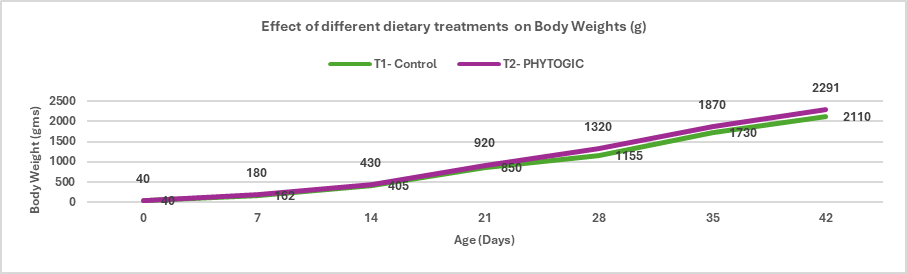
Fig.1. Effect of different dietary treatments on Body Weights (g)

Conclusion: Broilers in the T2 – PHYTOGIC group fed at 150g/ton of feed achieved higher final body weights (2291 g) compared to the T1 – Control group (2110 g), showing an 8.22% improvement. This indicates that PHYTOGIC supplementation effectively enhances growth performance in broilers.

Fig.2. Effect of different dietary treatments on Feed Intake (g)

Conclusion: Broilers in the T2 – PHYTOGIC group fed at 150g/ton of feed consumed more feed (4015 g) compared to the T1 – Control group (3800 g), showing a 5.50% increase in feed intake. This suggests that PHYTOGIC supplementation may enhance feed consumption in broilers.

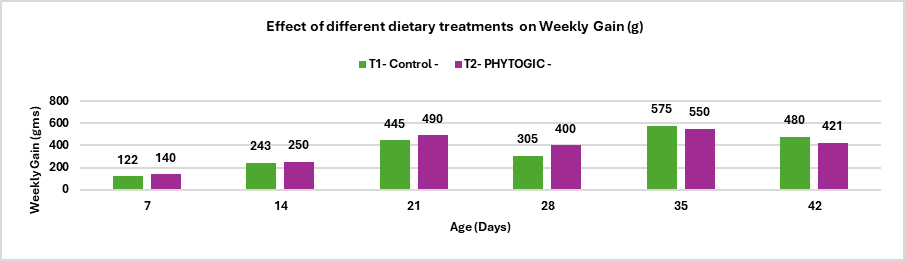
Conclusion: The average weekly percentage difference in weight gain between T2 – PHYTOGIC fed at 150g/ton of feed and T1 – Control was -3.84%, indicating that, overall, PHYTOGIC supplementation did not improve weekly weight gain in broilers and was slightly less effective than the control in this trial.

Fig.4. Effect of different dietary treatments on Feed Conversion Ratio

Conclusion: Broilers in the T2 – PHYTOGIC group fed at 150g/ton of feed showed an improved feed conversion ratio (1.75) compared to the T1 – Control group (1.80), with a 2.81% improvement. This suggests that PHYTOGIC supplementation enhances feed efficiency in broilers, allowing for better weight gain per unit of feed consumed.

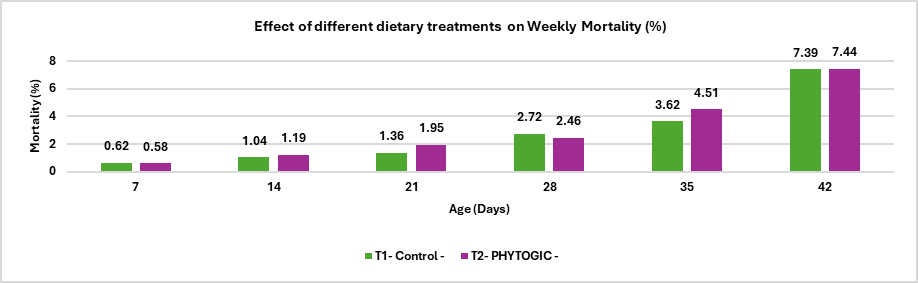
Fig.5. Effect of different dietary treatments on Weekly Mortality (%)

Conclusion:The mortality rate in the T2 – PHYTOGIC group fed at 150g/ton of feed was (7.44%) slightly higher than the T1 – Control group (7.39%), with a 0.27% difference. This minimal variation indicates that PHYTOGIC supplementation had no significant effect on broiler mortality under the conditions of this study.

Table 2. Summary of the Report-

ParametersT1- ControlT2- PHYTOGIC% Difference
Body Weight (g)211022918.22
Feed Intake (g)380040155.50
FCR1.801.752.81
CFCR1.771.675.81
Mortality (%)7.397.440.27

Discussion

The findings of the present field study demonstrate that dietary supplementation with PHYTOGIC at 150 g/ton improved broiler growth performance under commercial deep-litter and heat-stress conditions. Broilers receiving PHYTOGIC exhibited an 8.22% increase in final body weight compared to the control group, indicating enhanced nutrient utilization and metabolic efficiency. This improvement is consistent with previous reports showing that Macleaya cordata extract and its major alkaloid, sanguinarine, can promote growth by reducing intestinal inflammation, stabilizing gut microbiota, and improving nutrient absorption. The observed increase in feed intake (5.50%) in the PHYTOGIC group suggests that phytogenic supplementation may have positively influenced appetite or gut comfort, allowing birds to maintain adequate consumption despite environmental temperature stress.

Feed efficiency was also improved, as evidenced by reductions in FCR (1.75 vs. 1.80) and CFCR (1.67 vs. 1.77). This aligns with earlier studies reporting that sanguinarine-containing extracts suppress inflammatory pathways such as the HMGB1–TLR4–NF-κB axis, thereby reducing metabolic energy waste associated with immune activation. By lowering the inflammatory burden, PHYTOGIC likely allowed more dietary energy to be directed toward growth rather than immune-related maintenance. Improvements in FCR also support the hypothesis that phytogenic compounds enhance gut function through modulation of intestinal morphology and beneficial microbiota populations, as reported in previous research.

Weekly weight gain patterns showed some variation, with PHYTOGIC not consistently outperforming the control in all weeks. This may be attributed to fluctuating heat stress levels and daily feed intake variations typical of field conditions. However, despite these short-term variations, the cumulative performance benefits remained substantial by the end of the production cycle.

Importantly, mortality rates were nearly identical between treatments (7.39% vs. 7.44%), indicating that PHYTOGIC supplementation did not impose any negative health effects and is safe for use under commercial conditions. The lack of impact on mortality also suggests that the performance improvements were not driven by survivability differences but by true enhancement of growth and feed efficiency.

Overall, the results support the potential of PHYTOGIC as an effective phytogenic alternative to antibiotic growth promoters. Its ability to improve growth performance and feed efficiency, even under extreme heat, aligns with its known anti-inflammatory, antimicrobial, and gut-modulating properties. The findings strengthen the evidence that phytogenic compounds derived from Macleaya cordata can contribute to sustainable poultry production by enhancing physiological resilience and intestinal health.

Conclusion-

The trial was conducted in the extreme heat season where average temperature in the surrounding was around 42-45 degree Celsius. The T2 (PHYTOGIC) groups showed overall improved performance compared to the T1 (Control) group. Specifically, the body weight of T2 (PHYTOGIC) was 8.22% higher than T1 (Control), indicating better growth. Feed Conversion Ratio (FCR) and Corrected FCR (CFCR) were both lower in T2 (PHYTOGIC) by 2.81% and 5.81%, respectively, demonstrating more efficient feed utilization in the T2 (PHYTOGIC) group than T1 (Control). Mortality rates were nearly identical between the two groups, indicating that the supplement did not adversely affect survival. Overall, PHYTOGIC supplementation resulted in better growth performance and feed efficiency compared to the control with no significant impact on mortality.

References:

Bojjireddy N., Sinha R.K., Panda D., Subrahmanyam G. Sanguinarine suppresses IgE induced inflammatory responses through inhibition of type II PtdIns 47kinase(s) Arch. Biochem. Biophys. 2013; 537:192–197. doi: 10.1016/j.abb.2013.07.017. 

Bui TP, Ritari J, Boeren S, de Waard P, Plugge CM, de Vos WM. Production of butyrate from lysine and the amadori product fructoselysine by a human gut commensal. Nat Commun. 2015; 6:10062.

Fu C, Guan G, Wang H. The anticancer effect of sanguinarine: A review. Curr Pharm Des. 2018; 24:2760–4.

Hamoud R, Reichling J, Wink M. Synergistic antimicrobial activity of combinations of sanguinarine and edta with vancomycin against multidrug resistant bacteria. Drug Metab Lett. 2014; 8:119–28.

Huang P, Zhang Y, Xiao K, Jiang F, Wang H, Tang D, et al. The chicken gut metagenome and the modulatory effects of plant-derived benzylisoquinoline alkaloids. Microbiome. 2018; 6:211.

Khadem A., Soler L., Everaert N., Niewold T.A. Growth promotion in broilers by both oxytetracycline and Macleaya cordata extract is based on their anti-inflammatory propertiese. Br. J. Nutr. 2014; 112:1110–1118. doi: 10.1017/S0007114514001871.

Kim J.C., Hansen C.F., Mullan B.P., Pluske J.R. Nutrition and pathology of weaner pigs: Nutritional strategies to support barrier function in the gastrointestinal tract. Anim. Feed Sci. Technol. 2012; 173:3–16. 

Klasing KC, Laurin DE, Peng RK, Fry DM. Immunologically mediated growth depression in chicks: Influence of feed intake, corticosterone and interleukin-1. J Nutr. 1987; 117:1629–37.

Kosina P., Walterova D., Ulrichova J., Lichnovsky V., Stiborova M., Rydlova H., Vicar J., Krecman V., Brabec M.J., Simanek V. Sanguinarine and chelerythrine: assessment of safety on pigs in ninety days feeding experiment. Food Chem. Toxicol. 2004; 42:85–91. doi:

Kumar GS, Hazra S. Sanguinarine, a promising anticancer therapeutic: Photochemical and nucleic acid binding properties. RSC Adv. 2014; 4:56518–31.

Lee KW, Lillehoj HS, Jeong W, Jeoung HY, An DJ. Avian necrotic enteritis: Experimental models, host immunity, pathogenesis, risk factors, and vaccine development. Poult Sci. 2011; 90:1381–90.

Li JY, Huang HB, Pan TX, Wang N, Shi CW, Zhang B, et al. Sanguinarine induces apoptosis in eimeria tenella sporozoites via the generation of reactive oxygen species. Poult Sci. 2022; 101:101771.

Martin LB 2nd, Scheuerlein A, Wikelski M. Immune activity elevates energy expenditure of house sparrows: A link between direct and indirect costs? Proc Biol Sci. 2003; 270:153–8.

Niu X., Fan T., Li W., Xing W., Huang H. The anti-inflammatory effects of sanguinarine and its modulation of inflammatory mediators from peritoneal macrophages. Eur. J. Pharmacol. 2012; 689:262–269. doi: 10.1016/j.ejphar.2012.05.039.

Satokari R. Contentious host-microbiota relationship in inflammatory bowel disease–can foes become friends again? Scand J Gastroenterol. 2015; 50:34–42.

Shojadoost B, Vince AR, Prescott JF. The successful experimental induction of necrotic enteritis in chickens by clostridium perfringens: A critical review. Vet Res. 2012; 43:74.

Technical Bulletin: Efficacy of Pepigro on the performance of commercial broilers under field conditions.

Dr. Amit V. Janbandhu, Dr. Sanjay Singhal

Abstract

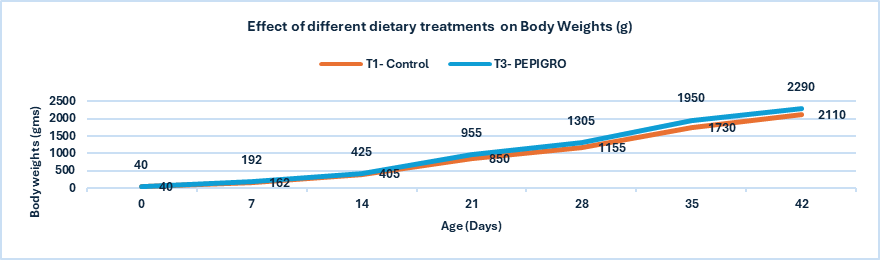
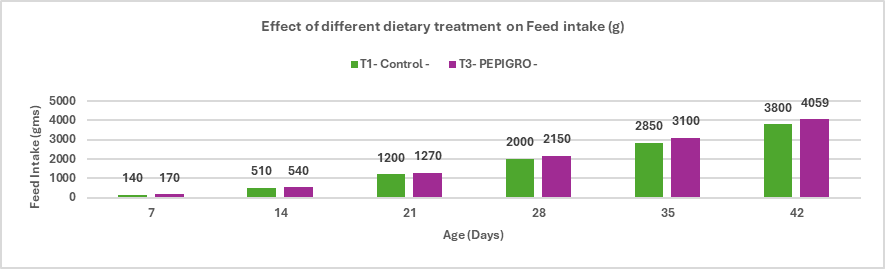
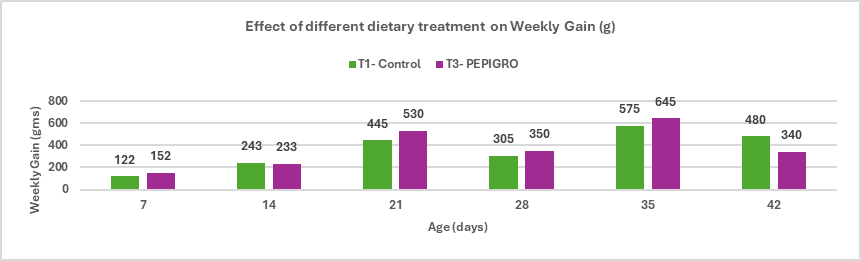
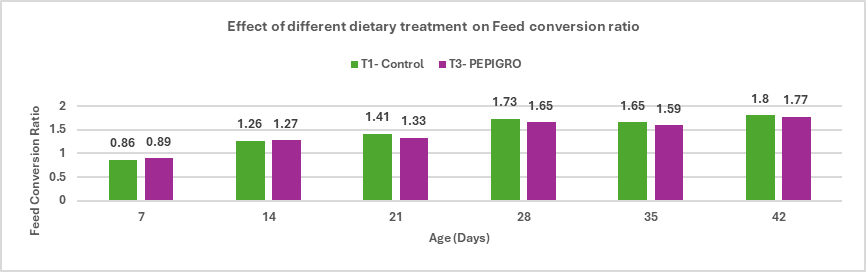
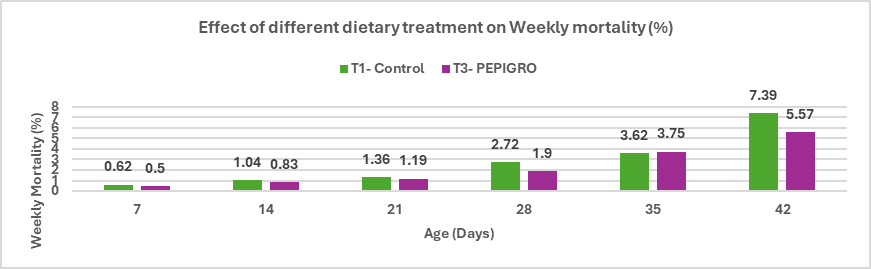
This study evaluates the efficacy of PEPIGRO, a Bacillus licheniformis-based probiotic and postbiotics as antimicrobial peptide (AMPs), on the growth and health performance of commercial broilers under field conditions. A total of 36,000 straight-run broiler chicks were assigned to control and treatment groups, with the latter receiving PEPIGRO supplementation at 300 g/ton of feed. The trial was conducted over 42 days during extreme heat (42–45°C), and assessed body weight, feed intake, feed conversion ratio (FCR), weekly gain, and mortality. PEPIGRO supplementation resulted in an 8.18% increase in body weight, a 6.59% rise in feed intake, and a 6.22% improvement in weekly gain compared to the control, alongside a 1.68% enhancement in FCR. Mortality was notably reduced by 28.08%, indicating improved survivability. These findings demonstrate that dietary inclusion of PEPIGRO effectively enhances broiler growth performance, feed efficiency, and health, supporting the role of Bacillus licheniformis as a promising antibiotic alternative under commercial field stressors.

Introduction

In recent decades, antibiotics have been extensively used in animal husbandry for their dual purposes of promoting growth and preventing or treating bacterial infections. However, the excessive and prolonged use of these drugs has led to serious public health and environmental concerns, including the emergence of antibiotic-resistant pathogens and environmental contamination, which pose risks to both humans and animals (Tang et al., 2017). Consequently, international authorities implemented strict prohibitions on antibiotic growth promoters (Organization, 1999), prompting researchers to explore alternative, safer strategies to enhance livestock productivity.

Among the promising alternatives, several bioactive feed additives—such as probiotics (Xu et al., 2021), antimicrobial peptides (Yi et al., 2017), plant extracts (Abullais Saquib et al., 2021), acidifiers (Pearlin et al., 2020), and plant essential oils (Montassier et al., 2021Ayalew et al., 2022)—have gained increasing attention. These compounds are valued for their ability to regulate growth performance, immune function, oxidative balance, and intestinal microbial homeostasis in animal models (Roselli et al., 2005). Among these options, probiotics have drawn special interest due to their safety profile, efficacy, and multifunctional benefits in the animal industry (Ningsih et al., 2023).

Probiotics have emerged as promising alternatives to antibiotics in poultry nutrition. These “friendly” bacteria contribute to gut health by enhancing digestion, modulating the immune system, improving intestinal barrier function, and competing against pathogenic microorganisms. Among the various probiotic candidates, species of the Bacillus genus—particularly Bacillus licheniformis—have attracted increasing attention due to their spore-forming capabilities, environmental resilience, and broad-spectrum biological activities. B. licheniformis is “generally recognized as safe” (GRAS) and has demonstrated antimicrobial, antioxidant, and immunomodulatory properties, making it a multifunctional probiotic with diverse applications in poultry production. Recent studies have shown that dietary supplementation with B. licheniformis can significantly enhance growth performance, feed conversion efficiency, egg production, intestinal morphology, and microbial balance in poultry (Pan et.al.2022).

Bacillus licheniformis is a Gram-positive, spore-forming bacterium characterized by high temperature and stress resistance recognized for its probiotic and postbiotic benefits. It produces digestive enzymes such as protease, amylase, lipase, and cellulase, which enhance nutrient utilization. By depleting intestinal oxygen, it fosters anaerobic conditions that promote beneficial bacteria (LactobacillusBifidobacterium) and suppress pathogens (Escherichia coli, Salmonella, Clostridium perfringens). In addition, B. licheniformis secretes bioactive metabolites, including bacteriocins, surfactins, licheniformins, and bacitracin, all of which possess antimicrobial properties (Giri et al. 2019). The bacteriocin, a 42-amino acid peptide (~4.7 kDa), exhibits strong α-helical conformation and acts by disrupting bacterial membranes and inhibiting intracellular processes such as nucleic acid and protein synthesis. These peptides not only suppress pathogens but also enhance host immunity by stimulating neutrophils, macrophages, mast cells, and NK cells, and inducing cytokine and chemokine production. Collectively, B. licheniformis improves feed digestibility, strengthens mucosal barrier function, supports gut microbiota balance, and enhances immune responses, making it a promising candidate for use in both animal nutrition and human health (Shleeva et.al.2023). Moreover, it improves antioxidant status by enhancing the activity of superoxide dismutase (SOD) and glutathione peroxidase (GPX), reduces harmful nitrogen waste (NH₃-N), and boosts microbial crude protein production in ruminants (Jia et al., 2018). Importantly, B. licheniformis supplementation modulates the intestinal microbiota composition and promotes microbial equilibrium, thus maintaining intestinal integrity and performance under disease challenge conditions (Chen and Yu, 2020).

Necrotic enteritis (NE), a major intestinal bacterial disease in poultry caused by Clostridium perfringens, accounts for estimated economic losses exceeding six billion U.S. dollars annually (Wade and Keyburn, 2015). C. perfringens is a Gram-positive, spore-forming anaerobe capable of producing up to 17 toxins (Parish, 1961). Among its toxin-producing variants, types A and C are primarily associated with NE development (Engström et al., 2003). The disease manifests in clinical and subclinical forms. While clinical NE can result in rapid mortality rates up to 50%, subclinical NE (SNE) leads to subtle intestinal injury characterized by reduced appetite, poor nutrient absorption, and depressed growth—all contributing to significant production losses (Timbermont et al., 2011).

NE infections commonly disrupt the intestinal barrier, induce inflammatory responses, and disturb gut microbial balance. Controlling intestinal health, therefore, is an effective preventive strategy against NE in broilers. In the search for sustainable approaches during the post-antibiotic era, probiotics like B. licheniformis have shown substantial potential in alleviating NE symptoms and restoring gut health (Venessa et al., 2016).

Research has demonstrated that B. licheniformis enhances tight junction protein (TJP) and mucin-2 gene expression in poultry, thereby maintaining intestinal integrity and reducing permeability (Wang Y. et al., 2017). Moreover, Bacillus spp. modulate immune responses through upregulation of Toll-like receptors (TLRs), NF-κB signaling, and cytokine synthesis (Rajput et al., 2017). These probiotics also regulate the intestinal microbiota composition, especially under NE challenges, thereby improving host resilience (Lin et al., 2017).

Given its enzymatic activity, antimicrobial peptide production, and regulatory effects on immune and intestinal functions, Bacillus licheniformis represents a viable natural feed additive capable of replacing traditional antibiotics. The present study sought to determine whether B. licheniformis can alleviate subclinical necrotic enteritis (SNE) in broilers as effectively as the antibiotic enramycin, by examining its roles in intestinal barrier maintenance, immune modulation, and gut microbiota balance.

Antimicrobial Peptides (AMPs)

Antimicrobial peptides (AMPs) are a diverse group of small bioactive molecules naturally found across a wide range of organisms. They are essential components of the innate immune system and serve as the first line of defense against a variety of pathogens. AMPs possess broad-spectrum activity against bacteria, fungi, parasites, and viruses, making them crucial in host protection (Huan et al., 2020).

 Over the past decades, the rapid rise of antibiotic resistance and growing concerns regarding antibiotic use have driven the exploration and development of AMPs as alternative therapeutic and preventive agents. Their potent antimicrobial properties, coupled with lower rates of resistance development, make them promising candidates for applications in medicine, food preservation, animal husbandry, agriculture, and aquaculture.

Antibacterial Substances Produced by Bacillus licheniformis

The endospore-forming bacterium Bacillus licheniformis is a prolific producer of a wide range of antimicrobial substances, each possessing unique structural and functional characteristics. Interestingly, even when cultured under identical conditions, different B. licheniformis strains synthesize distinct profiles of antibacterial compounds. These variations arise from differences in transcriptional or translational regulation, resulting in strain-specific antimicrobial expression patterns. The molecular masses of these secreted compounds typically range from 1.4 to 20 kDa . The major categories of antimicrobial compounds secreted by B. licheniformis include bacteriocins, licheniformins, bacitracin, and surfactin. (Shleeva et.al.2023).

1. Bacteriocins

Bacteriocins are ribosomally synthesized antimicrobial peptides or proteins that exhibit bactericidal or bacteriostatic activity against closely related bacterial species. B. licheniformis produces multiple types of bacteriocins, typically ranging in molecular weight from 1.4 to 55 kDa, depending on environmental conditions, growth phase, and strain genotype.For instance, B. licheniformis strain B116 secretes a bacteriocin of approximately 4 kDa with potent activity against both Gram-positive and Gram-negative bacteria, including Staphylococcus aureusListeria monocytogenesMicrococcus luteusBacillus cereusEscherichia coliStreptococcus equi, and Salmonella spp. This compound, recovered through ammonium sulfate precipitation, demonstrated strong resistance to heat, acidic, and alkaline conditions. However, enzymatic treatment with pronase completely abolished its antimicrobial activity, and partial inactivation was observed with papain and lipase, indicating the presence of a lipid moiety in its structure (Shleeva et.al.2023).

2. Licheniformins

Licheniformins are lipopeptide antibiotics produced by B. licheniformis, often existing as several closely related variants. The licheniformin lipopeptide produced by B. licheniformis MS3 has a molecular mass of approximately 1.438 kDa. Three principal components—licheniformins A, B, and C—have been identified, all sharing similar amino acid compositions and molecular weights (3.8–4.8 kDa). Despite their structural similarity, these peptides display different degrees of antibacterial potency and toxicity, reflecting subtle biochemical differences in their side-chain structures and lipid modifications (Shleeva et.al.2023).

3. Bacitracin

Bacitracin is a well-known polypeptide antibiotic non-ribosomally synthesized by certain strains of B. subtilis and B. licheniformis. It is composed of 12 amino acids, with four of them—glutamic acid, aspartic acid, phenylalanine, and ornithine—present in their D-isomer forms. The molecular mass of bacitracin is approximately 1.42 kDa. Bacitracin functions by interfering with bacterial cell wall synthesis, making it a clinically important peptide used to inhibit Gram-positive pathogens (Shleeva et.al.2023).

4. Surfactin

B. licheniformis is also capable of producing surfactin and its structural analog, lichenysin—both cyclic lipopeptides with powerful surface-active and antimicrobial properties. The strain B. licheniformis HSN221 was found to secrete nine variants of surfactin and lichenysin when cultured in a medium containing glucose, ammonium chloride, and yeast extract, which were optimal for lipopeptide biosynthesis. The molecular masses of the identified surfactin monomethyl ester homologues were approximately 1.048, 1.049, and 1.063 kDa, as confirmed by ESI-MS analysis. These compounds exhibit potent antimicrobial and emulsifying activity and have potential applications in pharmaceutical, agricultural, and environmental biotechnology (Shleeva et.al.2023).

Mechanism Of Action

1) Competition mechanism:

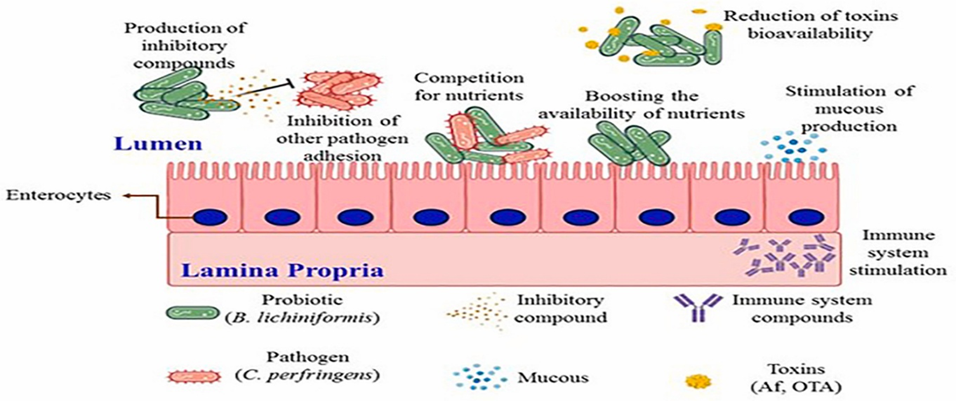
Fig.1. Probiotic Bacillus employ multifactorial competition mechanism to restrict the expansion of pathogens through four pathways. 

(1) Bacillus adapt itself in suitable niche against niche-occupying competitors. It approaches the intestinal mucous layer and competitively binds to intestinal epithelial cells and mucous layer components via surface proteins. Thus, the effect of niche occupation by Bacillus expels harmful bacteria from the host intestinal epithelial barrier and reduces pathogen invasion. (2) Competitive utilization of nutrients for Bacillus growth. Bacillus secrete various enzymes to rapidly exploit both the macronutrients and micronutrients in gut environment, resulting in limited availability of nutrition to pathogenic bacteria. (3) Bacillus produce an arsenal of antibacterial metabolites that directly inhibit the growth of pathogens. The metabolites included lipopeptides, bacteriocins, polyketides, and SCFAs are effective against the expansion and invasion of pathogens. (4) Bacillus can consume excess oxygen from gut lumen and host circulation for maintaining the intestinal environment in a state of hypoxia, which drive a dominance of bacteria such as lactate acid bacteria that use fermentation for energy production. (Zhu et.al. 2023).

2) Immunomodulatory activity:

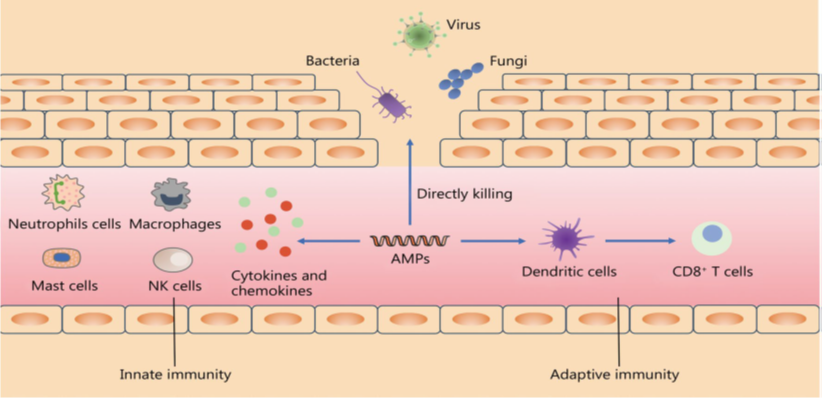
Fig.2. Models of antibacterial mechanisms of AMPs.

 Antimicrobial activity and immunomodulatory effects of AMPs, also known as host defence peptides, protect the host from infection. Pathogen invasion triggers a cascade of immunological responses (Fig. 6). Cathelicidins and defensins are mostly produced by neutrophils. The role of AMPs in the immune system is complicated. AMPs regulate the section of cytokines like interleukins; tumour necrosis factors (TNFs), IFNs, and chemokines, as well as the activities of immune cells like dendritic cells (DCs), monocytes, macrophages, mast cells, granulocytes, and lymphocytes, to keep the immune microenvironment in a dynamic balance. AMPs not only destroy invading pathogenic bacteria directly, but they also kill them indirectly by stimulating the immune system. On the one hand, AMPs can activate immune cells in the innate immune system, such as neutrophils, macrophages, mast cells, and NK cells, and trigger the release of cytokines and chemokines to engulf and destroy harmful germs. AMPs, on the other hand, can trigger adaptive immune responses, deliver antigens to T cells via dendritic cells (DCs), and activate cytotoxic T cells to kill pathogenic germs AMPs antimicrobial peptides; NK natural killer. (Babakuliyev et. al.2022).

3) The membrane-disruptive and non-membrane-disruptive antibacterial mechanisms of antimicrobial peptides (AMPs).

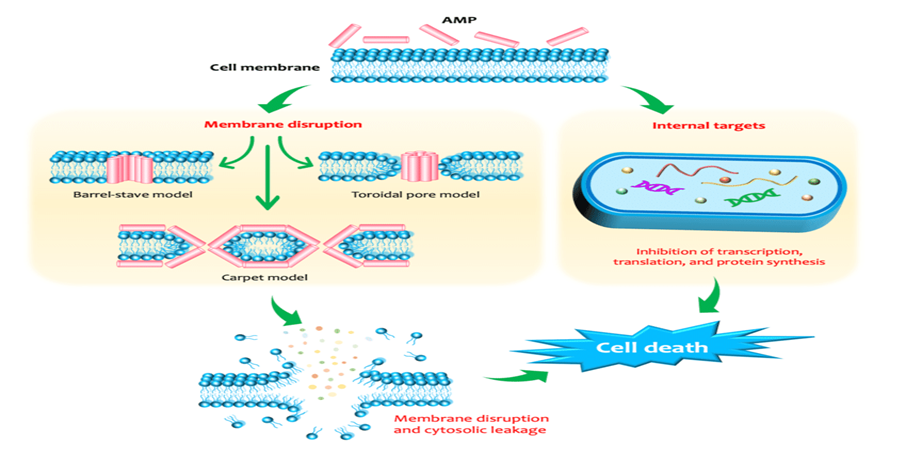
Fig.3. The membrane-disruptive and non-membrane-disruptive antibacterial mechanisms of antimicrobial peptides (AMPs).

 In the membrane-disruptive mechanisms, three types of interaction can occur between the membrane and the AMPs, including: (i) barrel-stave model: the peptide monomers form a hydrophilic transmembrane channel by arranging parallelly to the phospholipids of the membrane; (ii) carpet model: the peptides solubilize the membrane into micellar structures; and (iii) toroidal model: the lipid moieties fold inward due to the cascade aggregation of peptide monomers, forming a peptide-and-lipid-lined channel. After AMPs penetrate into the phospholipid membrane, their hydrophobic regions combine with the internal hydrophobic regions of the phospholipid bilayer, while their hydrophilic regions are exposed to the outside. Another bactericidal mechanism is that AMPs penetrate into the cytoplasm and interact with intracellular substances, such as inhibiting DNA, RNA and protein synthesis, inhibiting protein folding, inhibiting enzyme activity and cell wall synthesis, and promoting the release of lyases to destroy cell structures. AMPs antimicrobial peptides. (Le et.al. 2022). The aim of the study to evaluate the effect of PEPIGRO on the performance of commercial broilers reared on deep litter under field conditions.

MATERIALS AND METHODS

Experimental Design and Management

The trial was conducted at Harsh Broiler House -Bilaspur using Vencobb 430 straight run chicks (not sexed at hatchery) in three treatments of around 12000 birds in each treatment. A total of 36000 birds were considered for trial purpose. Feed Formulation used was same for all treatment groups except in T3 where PEPIGRO (Bacillus lincheniformis 3*109) was added at 300 gm per ton feed respectively in all stages. (Table.1). In the study, the energy level was equivalent to the standard requirements of broilers recommended in the Vencobb 430. The trial was carried out over a period of 42 days. The birds were fed ad lib feed and water was available all the time. Care was taken to provide good conditions by adopting strict biosecurity measures. The housing and vaccination procedures were same in both groups.

Table 1. Composition of basal diet for broiler chicks in control group for 3 phases.

Broiler Feed Formulation (Control)
Raw MaterialsPrestarterStarterFinisher
Maize625.15652.75686.65
HiPro Soya335300260
Soya Crude Oil61423
Limestone Powder8.58.58
Dicalcium Phosphate10108
L Lysine HCI2.72.42.3
DL Methionine3.332.7
L Threonine111
Salt2.52.52.5
Soda Bi Carb1.51.51.5
Choline Chloride 60%111
Organic TM0.50.50.5
Broiler Vitamin Premix0.50.50.5
Coccidiostat0.50.50.5
AGP0.050.050.05
NSP Enzyme0.10.10.1
Phytase 50000.10.10.1
Feed Acidifier111
Toxin Binder0.60.60.6

*The figures are in Kilograms.

 The premix provided the following per kilogram of the diet: vitamin A, 6000 IU; vitamin D3, 2500 IU; vitamin B1, 1.75 mg; vitamin B2, 5.5 mg; vitamin B6, 4 mg; vitamin B12, 0.18 mg; vitamin E, 25 mg; vitamin K3, 2.25 mg; Cu, 7.5 mg; Mn, 60 mg; Fe, 75 mg; Zn, 60 mg; Se, 0.15 mg; biotin, 0.14 mg; NaCl, 3.7 g; folic acid, 0.8 mg; pantothenic acid, 12 mg; phytase, 400 U; nicotinic acid, 34 mg; chloride, 350 mg. *Nutrient levels were all calculated values.

Treatment Details-

T1: Control group fed basal diet

T3: Control group fed basal diet + PEPIGRO @300 g PMT

Parameters Studied-

  1. Body Weight gain was recorded weekly
  2. Feed Consumption recorded daily and leftover feed was adjusted in the other day quota to know actual intake.
  3. Mortality was recorded daily
  4. EEF calculated post harvesting of the flock
  5. FCR was calculated every week and post harvesting of the flock

Result:

Effect of Pepigro on growth performance parameter in broiler.

Fig.1. Effect of different dietary treatments on Body Weights (g)

Conclusion: PEPIGRO supplementation at 300g/ton of feed (T3) resulted in a statistically significant 8.18% increase in broiler body weight compared to the control (T1), indicating improved growth performance.

Fig.2. Effect of different dietary treatment on Feed intake (g)

Conclusion: The broiler supplemented with PEPIGRO (T3) at 300g/ ton of feed had a feed intake of 4059 g, which is 6.59% higher than the control group (T1) with 3800 g feed intake. This increase in feed intake indicates that PEPIGRO supplementation positively influenced the birds’ feeding behaviour, likely by enhancing the palatability or nutrient availability of the diet.

Fig.3. Effect of different dietary treatment on Weekly Gain (g)

Conclusion:  PEPIGRO (T3) supplementation in broiler diet at 300g/ton of feed resulted in the average percentage difference in weekly gain between T1 (Control) is approximately 6.22%. This indicates that PEPIGRO supplementation had a positive overall effect on growth performance, enhancing weight gain efficiency in broiler chickens.

Fig.4. Effect of different dietary treatment on Feed conversion ratio

Conclusion:  PEPIGRO (T3) supplementation in broiler diet at 300g/ton of feed resulted in a 1.68% improvement in feed conversion ratio (FCR) compared to the control group (T1), indicating enhanced feed efficiency and better growth performance.

Fig.5. Effect of different dietary treatment on Weekly mortality (%)

Conclusion: PEPIGRO supplementation at 300g/ton of feed reduced mortality in broiler poultry from 7.39% in the control group to 5.57%, reflecting a 28.08% decrease. This suggests that PEPIGRO may contribute to improved bird health and survivability during the rearing period.

Table 2. Summary of the Report

ParametersT1- ControlT3- PEPIGRO% Difference
Body Weight (g)211022908.18
Feed Intake (g)380040596.59
FCR1.81.771.68
CFCR1.771.694.62
Mortality (%)7.395.5728.08

Discussion

The discussion for this article highlights the significant positive effects of PEPIGRO, a Bacillus licheniformis-based probiotic, on the growth performance, feed efficiency, and health status of commercial broilers under field conditions. The 8.18% increase in body weight and 6.59% increase in feed intake, along with improvements in feed conversion ratio (FCR), align well with previous studies showing Bacillus probiotics enhance nutrient digestibility, modulate gut microbial populations, and improve intestinal morphology (Pan et al., 2022; Hung et al., 2019). These effects are especially valuable in the context of rising restrictions on antibiotic growth promoters (Tang et al., 2017), pushing for safer and sustainable alternatives.

The notable 28.08% reduction in mortality observed in this study suggests enhanced resilience of broilers to environmental stressors, likely owing to improved gut barrier integrity and immune modulation. Bacillus licheniformis produces antimicrobial peptides, enzymes, and metabolites such as bacteriocins and surfactins that inhibit pathogens like Clostridium perfringens, a major agent of necrotic enteritis (NE) in poultry (Shleeva et al., 2023; Wade and Keyburn, 2015). PEPIGRO’s capacity to maintain intestinal health and microbial balance may underlie the reduced pathogenic infections and inflammation, consistent with findings that show Bacillus supplementation upregulates tight junction proteins and mucins while enhancing beneficial microbes like Lactobacillus (Chen and Yu, 2020; Wang et al., 2017).

Moreover, the probiotic’s ability to stimulate the host immune system by inducing cytokine production and activating phagocytic cells further supports its protective role in the gut environment (Babakuliyev et al., 2022). This immunomodulatory effect is critical for mitigating subclinical infections and improving overall flock welfare, which translates into better productivity under commercial rearing conditions.

Additionally, PEPIGRO contributes to antioxidant status improvement by elevating enzyme activities such as superoxide dismutase and glutathione peroxidase, reducing oxidative stress that commonly compromises poultry health under heat stress conditions (Jia et al., 2018). This antioxidant benefit complements its antimicrobial and immunomodulatory functions.

In conclusion, this study reinforces the role of Bacillus licheniformis as a multifunctional probiotic that enhances growth performance, feed efficiency, and health in broilers. It offers a sustainable alternative to antibiotics, aligning with global efforts to reduce antibiotic use in animal production. Future studies should explore optimal dosing strategies, combinations with other feed additives, and long-term effects on microbiota composition and immune function to fully harness the benefits of PEPIGRO in commercial poultry systems.

Conclusion-

The trial was conducted in the extreme heat season where average temperature in the surrounding was around 42-45 degree Celsius. The T3 (PEPIGRO) group showed notable improvements compared to the T1 (Control) group. Body weight in T3 (PEPIGRO) increased by 8.18% compared to T1 (Control), indicating better growth performance. Both Feed Conversion Ratio (FCR) and Corrected Feed Conversion Ratio (CFCR) in T3 (PEPIGRO) improved, showing reductions of 1.68% and 4.62%, respectively, compared to T1 (Control), indicating more efficient feed utilization. Additionally, mortality rate in T3 (PEPIGRO) decreased significantly by 28.08% compared to T1 (Control), reflecting better overall health and survival. These results suggest that PEPIGRO supplementation positively impacts growth, feed efficiency, and mortality compared to Control.

References:

B. Rossi, A. Toschi, A. Piva, E. Grilli,Single components of botanicals and nature-identical compounds as a non-antibiotic strategy to ameliorate health status and improve performance in poultry and pigs Nutr. Res. Rev., 33 (2020), pp. 218-234

B.V. Pearlin, S. Muthuvel, P. Govidasamy, M. Villavan, M. Alagawany, M. RagabFarag, K. Dhama, M. Gopi, Role of acidifiers in livestock nutrition and health: a review J. Anim. Physiol. Anim. Nutr. (Berl.), 104 (2020), pp. 558-569

Babakuliyev, Alisir & Porwal, Prateek & Maiti, Niladri & Singh, Gyan & Khan, Shahbaz & Singh, Gajender & Chanchal, Dilip Kumar. (2022). Design, synthesis, and structural activity relationship of antimicrobial peptides against multi-drug-resistant organisms. International journal of health sciences. 10.53730/ijhs. v6nS2.8211.

E. Montassier, R. Valdés-Mas, E. Batard, N. Zmora, M. Dori-Bachash, J. Suez, E. Elinav, Probiotics impact the antibiotic resistance gene reservoir along the human GI tract in a person-specific and antibiotic-dependent manner Nat. Microbiol., 6 (2021), pp. 1043-1054

K. Luo, Y. Liu, G. Qin, S. Wang, C. Wei, M. Pan, Z. Guo, Q. Liu, X. Tian ,A comparative study on effects of dietary three strains of lactic acid bacteria on the growth performance, immune responses, disease resistance and intestinal microbiota of Pacific white shrimp, Penaeus vannamei, Fish Shellfish Immunol., 136 (2023), Article 108707

K.L. Tang, N.P. Caffrey, D.B. Nóbrega, S.C. Cork, P.E. Ronksley, H.W. Barkema, A.J. Polachek, H. Ganshorn, N. Sharma, J.D. Kellner, W.A. Ghali, Restricting the use of antibiotics in food-producing animals and its associations with antibiotic resistance in food-producing animals and human beings: a systematic review and meta-analysis, Lancet Planet Health, 1 (2017), pp. e316-e327.

Le, Mi & Kawada-Matsuo, Miki & Komatsuzawa, Hitoshi. (2022). Efficiency of Antimicrobial Peptides Against Multidrug-Resistant Staphylococcal Pathogens. Frontiers in Microbiology. 13. 10.3389/fmicb.2022.930629.

M. Roselli, A. Finamore, M.S. Britti, P. Bosi, I. Oswald, E. Mengheri, Alternatives to in-feed antibiotics in pigs: evaluation of probiotics, zinc or organic acids as protective agents for the intestinal mucosa. A comparison of in vitro and in vivo results,Anim. Res., 54 (2005), pp. 203-218

M. Tian, X. He, Y. Feng, W. Wang, H. Chen, M. Gong, D. Liu, J.L. Clarke, A. van. Eerde Pollution by antibiotics and antimicrobial resistance in livestock and poultry manure in China, and counter measures; Antibiotics, 10 (2021), p. 539.

N. Ningsih, A. Respati, D. Astuti, T. Triswanto, L. Purnamayanti, A. Yano, R. Putra, A. Jayanegara, A. Ratriyanto, A. Irawan, Efficacy of Bacillus subtilis to replace in-feed antibiotics of broiler chickens under necrotic enteritis-challenged experiments: a systematic review and meta-analysis, Poult. Sci., 102 (2023), Article 102923.

Pan X, Cai Y, Kong L, Xiao C,Zhu Q and Song Z (2022) Probiotic Effects of Bacillus licheniformis DSM5749 on Growth Performance and Intestinal Microecological Balance of Laying Hens. Front. Nutr. 9:868093. doi: 10.3389/fnut.2022.868093.

Quette Grant, Cyril G. Gay & Hyun S. Lillehoj (2018): Bacillus spp. as directed microbial antibiotic alternatives to enhance growth, immunity, and gut health in poultry, Avian Pathology, DOI: 10.1080/03079457.2018.1464117

S. Abullais Saquib, N.A. AlQahtani, I. Ahmad, S. Arora, S. Mohammed Asif, M. Ahmed Javali, N. Nisar, Synergistic antibacterial activity of herbal extracts with antibiotics on bacteria responsible for periodontitisJ. Infect. Develop. Count., 15 (2021), pp. 1685-1693

S. Giri, E. Ryu, V. Sukumaran, S.C. Park, Antioxidant, antibacterial, and anti-adhesive activities of biosurfactants isolated from Bacillus strains. Microb. Pathogen., 132 (2019), pp. 66-72

Shleeva MO, Kondratieva DA, Kaprelyants AS. Bacillus licheniformis: A Producer of Antimicrobial Substances, including Antimycobacterials, Which Are Feasible for Medical Applications. Pharmaceutics. 2023 Jul 5;15(7):1893. doi: 10.3390/pharmaceutics15071893. PMID: 37514078; PMCID: PMC10383908.

W.H. Organization, Containing Antimicrobial Resistance: Review of the Literature and Report of a WHO Workshop on the Development of a Global Strategy for the Containment of Antimicrobial Resistance. Geneva, Switzerland, 4-5 February 1999 (1999),

Y. Xu, Y. Yu, Y. Shen, Q. Li, J. Lan, Y. Wu, R. Zhang, G. Cao, C. Yang, Effects of Bacillus subtilis and Bacillus licheniformis on growth performance, immunity, short chain fatty acid production, antioxidant capacity, and cecal microflora in broilers, Poult. Sci., 100 (2021), Article 101358

Yuchen Huan 1Qing Kong 1,*Haijin Mou 1Huaxi Yi 1, Antimicrobial Peptides: Classification, Design, Application and Research Progress in Multiple Fields, Front Microbiol. 2020 Oct 16;11:582779. doi: 10.3389/fmicb.2020.582779

Zhu, Jiajia & Chen, Yunsheng & Imre, Kálmán & Arslan Acaroz, Damla & Istanbullugil, Fatih & Fang, Yuwen & Ros, Gaspar & Zhu, Kui & Acaröz, Assoc Prof Dr Ulas. (2023). Mechanisms of probiotic Bacillus against enteric bacterial infections. One Health Advances. 1. 10.1186/s44280-023-00020-0.

Knowledge, Interaction and Prevention: Poultry Farmers Come Together at Barshi Seminar

Venue: Barshi, Solapur District | Date: 24th December 2025

A lively gathering of poultry farmers marked the technical outreach seminar organized by Stallen South Asia Pvt. Ltd. at Barshi, Solapur district, Maharashtra on 24th December 2025, where more than 50 broiler, Breeder and layer farmers came together to learn, share, and discuss better ways to manage flock health.

Held under the theme “Understanding Common Poultry Diseases: Causes, Prevention and Practical Management,” the program created an open platform for farmers to interact directly with technical experts and exchange real farm experiences.

The session opened with Mr. Macchindra Shinde, Regional Sales Manager (West), welcoming the farmers and encouraging them to make such programs a part of their learning journey. He stressed that progress in poultry farming comes not only from hard work, but also from staying informed and adopting the right practices. Mr. Rahul Ankushe, Area Sales Manager, Stallen South Asia Pvt. Ltd., actively supported farmer coordination throughout the program.

The technical talk by Dr. Kishor Gedam, Product Manager, Stallen South Asia Pvt. Ltd., focused on everyday challenges faced by poultry farmers. He spoke about common diseases such as CRD, Colibacillosis, Infectious Coryza, and Salmonellosis, while repeatedly emphasizing prevention over treatment, strong biosecurity, and judicious antibiotic use as the cornerstones of successful farming.

Rather than just a lecture, the session turned into an interactive discussion, with farmers sharing their concerns and field situations. Dr. Gedam addressed their queries with practical insights, making the session highly relatable and engaging.

The warm response from farmers reflected their eagerness to adopt better practices and improve farm performance. Many participants expressed that such interactions help them gain confidence in decision-making and reduce avoidable losses.

The seminar stood as a reflection of Stallen South Asia Pvt. Ltd.’s farmer-first approach, reinforcing its commitment to walk alongside poultry farmers by providing not just solutions, but also the knowledge needed to build healthier flocks and more resilient farms.

Stallen South Asia Conducts Poultry Health Awareness Seminar at Tembhurni, Solapur District, Maharashtra

Venue: Tembhurni, Solapur District | Date: 23rd December 2025

Stallen South Asia Pvt. Ltd. organized a poultry farmer awareness seminar at Tembhurni, Solapur district, Maharashtra, on 23rd December 2025, as part of its ongoing farmer-centric technical outreach initiatives. The program witnessed the participation of over 50 broiler and layer farmers from nearby poultry pockets, reflecting strong interest in practical disease prevention and farm management.

The seminar was conducted under the theme “Understanding Common Poultry Diseases: Causes, Prevention, and Practical Management.” The event began with a welcome address by Mr. Macchindra Shinde, Regional Sales Manager (West), Stallen South Asia Pvt. Ltd., who emphasized the importance of continuous knowledge sharing and industry–farmer collaboration to strengthen flock health and productivity. The session was supported by Mr. Rahul Ankushe, Area Sales Manager (West), Stallen South Asia Pvt. Ltd., who coordinated farmer participation.

The technical session was delivered by Dr. Kishor Gedam, Product Manager, Stallen South Asia Pvt. Ltd., who addressed farmers on common poultry diseases including CRD (Mycoplasmosis), Colibacillosis, Infectious Coryza, and Salmonellosis, along with the importance of biosecurity and antibiotic stewardship. The focus remained on prevention, right farm practices, and responsible health management as the foundation of profitable poultry farming.

It highlighted that disciplined hygiene, water sanitation, shed management, and movement control can significantly reduce disease challenges, while judicious use of antibiotics is essential for long-term sustainability of the industry.

The seminar saw good interaction, with farmers actively raising practical questions related to their on-farm challenges. The discussions helped bridge technical recommendations with field realities.

This interactive seminar received positive feedback from participants, who appreciated the simple and practical approach of the session. The event reaffirmed Stallen South Asia Pvt. Ltd.’s commitment to supporting poultry farmers through knowledge-driven engagement and technical outreach aimed at building healthier and more sustainable poultry operations.

” The Burden of Salmonella in Poultry: Implications for Health, Productivity, and Biosecurity “

Salmonella is a leading cause of foodborne illness globally, with non-typhoidal serotypes like S. Enteritidis and S. Typhimurium responsible for the majority of gastroenteritis cases. In India, though national surveillance data is limited, reports under the Integrated Disease Surveillance Programme (IDSP) show hundreds of foodborne outbreaks annually, with thousands affected. Vulnerable groups such as infants and immune compromised individuals are particularly at risk, as even low doses of Salmonella can trigger severe illness. South Asia reports an estimated 2.2 cases of invasive non-typhoidal Salmonella per 100,000 people annually, with a high fatality rate. Poultry—especially chicken meat and eggs—remains a primary reservoir, with multiple studies indicating widespread contamination and rising antimicrobial resistance, posing significant public health risks.

With increasing demand for poultry and growing concerns over antibiotic resistance, India faces the challenge of balancing production efficiency with food safety. Regulatory moves to restrict antibiotic use, combined with consumer preference for antibiotic-free meat, are pushing the industry towards alternative control strategies. Preharvest measures like biosecurity, improved farm hygiene, and feed additives, along with postharvest controls such as HACCP implementation, are being emphasized. Vaccination has become a core preventive tool; however, the need persists for more robust vaccines offering cross-protection against diverse and emerging serotypes. This review highlights the current understanding of Salmonella in poultry and explores sustainable control approaches suitable for the Indian context.

Transmission:

Salmonella primarily spreads through the faeces of infected chicks, contaminated feed, water, and litter. Human activities, such as farm visits without proper biosecurity and movement between chicken houses, also contribute to its spread. Transmission occurs via direct contact with infected birds or indirectly through contaminated environments. Vertical transmission, particularly through infected eggs, is key in sustaining outbreaks, as asymptomatic carriers can pass the bacteria to offspring for up to 14 weeks. These bacteria can survive in the environment for months under favourable conditions, though sunlight and high temperatures reduce their persistence. Wild birds, mammals, and insects, especially red mites, can act as vectors, complicating control efforts.

Fig.1: Transmission of Salmonella.

Pathogenesis:

             Salmonella pathogenesis starts when bacteria are ingested, surviving the stomach’s acidity to invade the intestinal mucosa using virulence factors like plasmids, toxins, fimbriae and flagella. They infect non-phagocytic cells and macrophages, triggering inflammation and evading the immune system. The bacteria spread via the bloodstream to organs like the liver, spleen and kidneys causing symptoms such as diarrhoea, loss of appetite and depression, leading to high mortality, especially in young chicks. Salmonella can be transmitted both vertically and horizontally. It induces inflammation, macrophage apoptosis, and can cause severe haemolytic anaemia, leading to rapid death. The incubation period is typically 4 to 6 days.

Clinical signs:

Pullorum disease mainly affects young birds particularly chicks under 3-4 weeks old, with peak mortality at 2-3 weeks. Infected embryos may die in the egg and recently hatched chicks often exhibit signs of acute septicaemia such as depression, weakness, loss of appetite, drooping wings, huddling, laboured breathing, dehydration, and ruffled feathers. White, viscous diarrhoea and faecal pasting around the vent are common. Older chicks may experience a less acute disease course, sometimes developing arthritis or blindness. Survivors may be underweight, poorly feathered and less productive as adults. Infections in birds older than 4 weeks are usually asymptomatic but can result in decreased egg production and fertility. Fowl typhoid affects birds of all ages with symptoms like depression, appetite loss, weight loss, dehydration, ruffled feathers, yellowish diarrhoea and respiratory distress. Older birds may experience decreased egg production, fertility, and hatchability leading to anaemia with pale, shrunken combs and wattles. Atypical outbreaks, such as one in quail characterized by decreased egg laying and high mortality without clear clinical signs can also occur.

Diagnosis:

Lesions may be highly suggestive; however, diagnosis should be confirmed by isolation, identification, and serotyping of S Pullorum. Infections in mature birds can be identified by serological tests, followed by necropsy evaluation complemented by microbiological culture and typing for confirmation.

Official testing recommendations for flocks in the US are outlined in the National Poultry Improvement Plan (NPIP). The NPIP lists approved rapid assays for Salmonella. These include, for example, PCR assay and lateral flow immunoassays. Some assays are for the general detection of all Salmonella spp. Further typing is required after these general detection assays. Other NPIP-approved rapid assays are specific for Salmonella enterica serotype enteritidis like plasmid profiling and ribotyping, aid in accurate identification and differentiation.

Postmortem lesions:

The liver is yellowish in colour with haemorrhagic streaks. In chronic cases the ovary consists of pedunculate and misshapen ovules. The most obvious lesion includes enlarged and congested liver, which becomes dark red or brown (bile-stained liver) after exposure to the atmosphere. There may be multiple necrotic areas throughout the liver. There is congestion and necrosis of the liver and spleen with catarrhal enteritis.

Fig. 2 Granulomatous hepatitis, liver, chicken

Antimicrobial Resistance:

Antimicrobial resistance is a growing global challenge, worsened by insufficient assessments of Salmonella resistance and lack of regulation. The easy access to antimicrobials without prescriptions, along with incomplete treatments, exacerbates the problem. In poultry farming, the overuse of antibiotics has led to the development of resistant strains, including those producing extended spectrum beta-lactamases (ESBLs), posing a serious threat to both public health and the poultry industry (Parvej et al., 2016). Resistance mechanisms include bacterial target modifications, changes in cell membrane permeability, and efflux pumps. Misuse of antibiotics has resulted in the rise of multidrug-resistant Salmonella strains, making treatment more difficult and highlighting the need for more careful antibiotic use (Farhat et al., 2023).

Prevention and control:

Preventing and controlling salmonellosis on poultry farms is essential. Key strategies include removing infected birds, keeping healthy and sick birds separate and using testing methods like tube-agglutination to screen flocks. Strong biosecurity measures, such as strict hygiene, controlled farm access, and proper management of litter, feed, and water, help reduce disease spread. Without these measures, fowl typhoid poses a significant economic threat, highlighting the need for organized control programs with accurate testing and prompt action.

Vaccination plays a crucial role in preventing and controlling salmonellosis on poultry farms. Effective vaccines can help reduce infection rates of fowl typhoidand salmonella enteritidis providing long-term protection for flocks. In addition to vaccination, strategies like early identification and removal of infected birds, routine testing, and strict biosecurity measures (e.g., hygiene, controlled farm access) are essential for minimizing disease spread. Combining vaccination with proper management of litter, feed, and water enhances flock health and reduces the economic impact of fowl typhoid, making it a key component of any comprehensive disease control program.

Stallen South Asia Pvt. Ltd. is offering a unique live vaccine BIO-VAC SGP 695, against fowl typhoid and salmonella Enteritidis.

Key features of BIO-VAC SGP 695

  • BIO-VAC SGP 695 contains the live attenuated strain SGP 695 AV of Salmonella gallinarum/pullorum that induces a strong active immunity in vaccinated pullets, against fowl typhoid, reducing mortality, clinical signs, pathological lesions, losses in eggs production and against Salmonella enteritidis infection, reducing the colonisation of internal organs and ovary.
  • In drinking water administration.
  • Stable attenuated and total apathogenicity of the vaccine strain.
  • Reduction of vaccination procedure costs.

Why choose BIO-VAC SGP 695 than SG 9R salmonella vaccine?

 BIO- VAC SGP 695SG  9R vaccine
Strain695 AV (Live attenuated)9R (Rough strain with possible reversion)
CharacteristicsDoes not revert to virulencePossible reversion to virulence
Targeted InfectionsSalmonella gallinarum, Salmonella pullorum, Salmonella EnteritidisPrimarily Salmonella gallinarum (Fowl Typhoid)
AdministrationOral (via drinking water)Subcutaneous injection
Vaccination ProgramInitial dose at 6-8 weeks, second at 16-18 weeks. Early dose if early infection history.Initial dose at 6 weeks, revaccination every 12 weeks for layers.
EffectivenessBroad protection including Salmonella EnteritidisFocused on protection against Salmonella gallinarum

Fig 3: ELISA report of BIO-VAC SGP  695 and SG 9R vaccine

Dr. Kishor Gedam

Product Manager- Therapeutics

Stallen South Asia Pvt. Ltd

Dr. Sanjay Singhal

Chief Operating Officer Stallen South Asia Pvt. Ltd

References

  1. Jajere, S.M., 2019. A review of Salmonella enterica with particular focus on the pathogenicity and virulence factors, host specificity and antimicrobial resistance including multidrug resistance. Vet. World, 12: 2231-0916.
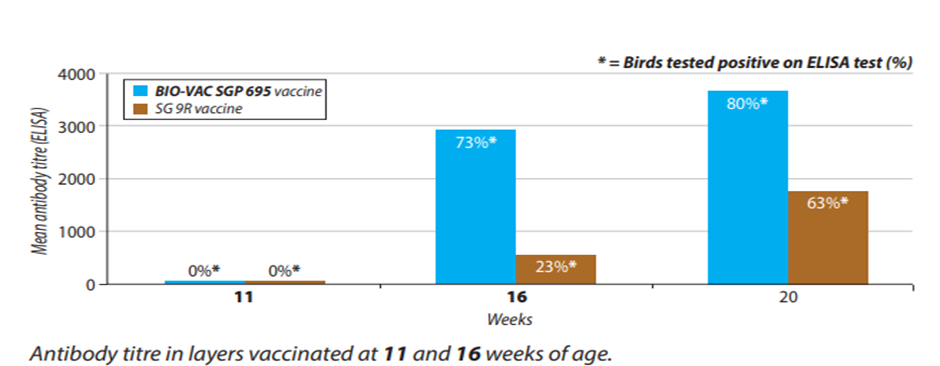
  2. Kebede, D., Z. Tekle, A. Gezahegne, G. Abdisa, R. Mulatu, A. Wondimu and A. Ayesheshum, 2019. Review on Salmonella Gallinarum-Pullorum. British Journal of Poultry Sciences, 8(1): 10-16.
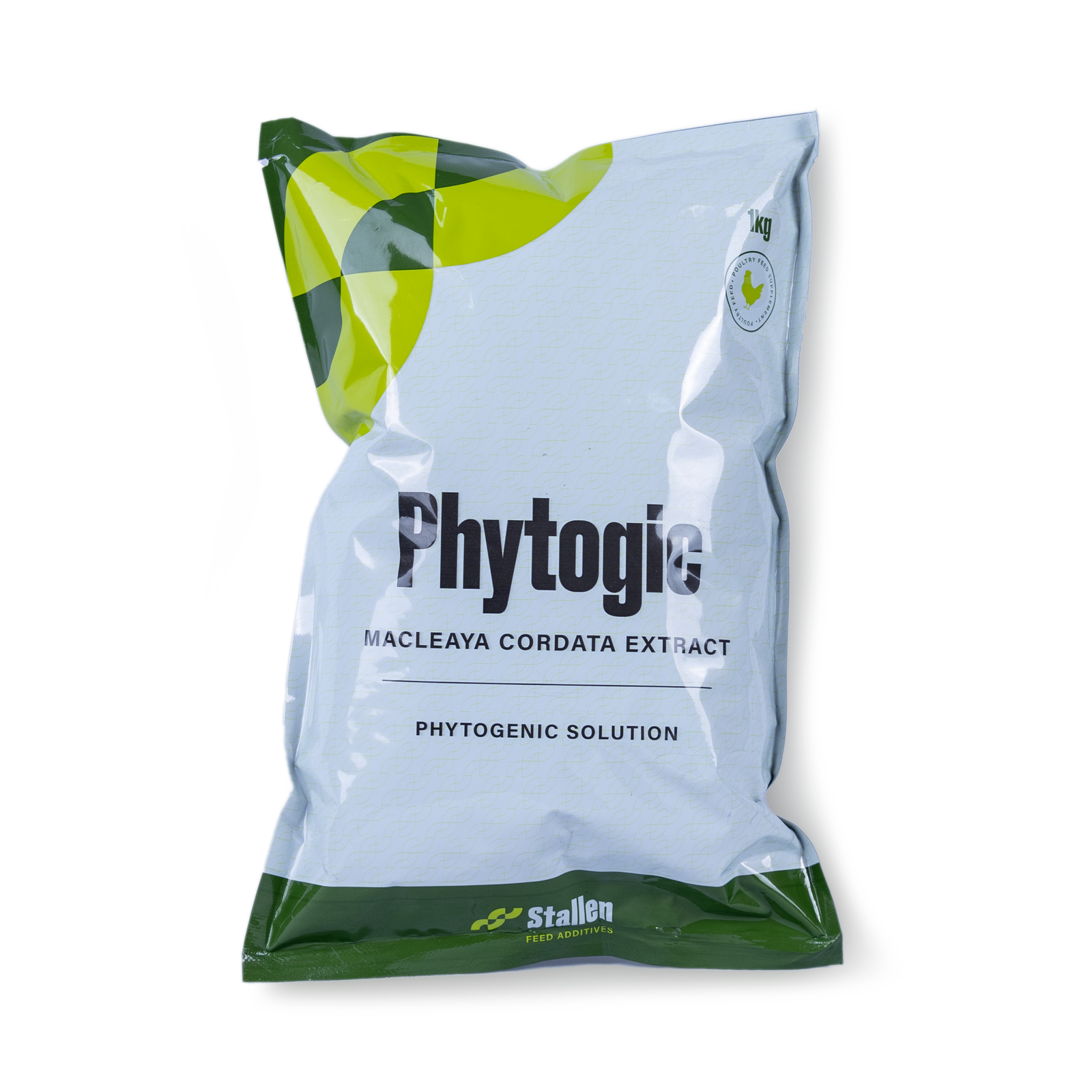
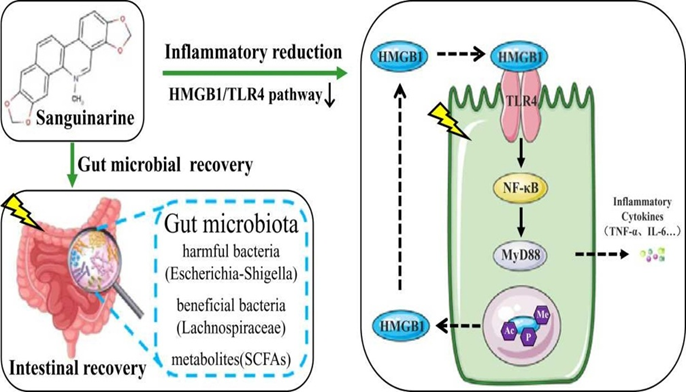
  3. Davison, S., 2019. Pullorum Disease in Poultry, Laboratory of Avian Medicine and Pathology, School of Veterinary Medicine, University of Pennsylvania, pp: 1-20.
  4. Parvej, M.S., K.H. Nazir, M.B. Rahman, M. Jahan,M.F. Khan and M. Rahman, 2016. Prevalence and characterization of multi-drug resistant Enterica serovar gallinarum biovar Pullorum and gallinarum from chicken. Vet. World, 9(1): 65-70.
  5. Farhat, M., Khayi, S., Berrada, J., Mouahid, M., Ameur, N., El-Adawy, H., & Fellahi, S. (2023). Salmonella enterica Serovar Gallinarum Biovars Pullorum and Gallinarum in Poultry: Review of Pathogenesis, Antibiotic Resistance, Diagnosis and Control in the Genomic Era. Antibiotics13(1), 23.

Stallen Technical Meet—November 2025, on Poultry Health & Immunization Held in Midnapore, West Bengal

Stallen South Asia Pvt. Ltd. successfully organized a high-impact Technical Meeting for poultry farmers in Midnapore, West Bengal, on 18th November 2025. The event saw the participation of over 30 progressive layer farmers, making it a meaningful platform for scientific discussion, disease awareness, and interaction with experts. The program began with a warm welcome by Mr. Biplab Kumar Deb, Regional Manager, who emphasized the company’s commitment to strengthening poultry health management in the region through regular technical interventions and farmer engagement.

This was followed by an insightful Company Introduction delivered by Dr. Sanjay Singhal, Chief Commercial Officer. He highlighted the growth of Stallen South Asia Pvt. Ltd., its role in bringing high-quality poultry health solutions to India, and its long-standing collaboration with FATRO, Italy, a global leader in vaccine research and development. Dr. Singhal also discussed the company’s vision of delivering innovative and reliable immunization tools to Indian farmers, backed by international expertise.

The highlight of the event was an in-depth Technical Seminar by Dr. Sushil Kumar Dhariwal, a respected poultry consultant with over 17 years of experience in breeder and layer management. His session, titled “Combating RD, IB, Marek’s and Coryza: Understanding Disease Mechanisms and Immunization Strategies,” focused on the evolving challenges of respiratory and immunosuppressive diseases in layer flocks. Dr. Dhariwal explained disease mechanisms, practical vaccination approaches, and flock-level management strategies, providing farmers with actionable insights for improving immunity and reducing disease pressure.

Following the seminar, Dr. Kishor Gedam, Product Manager, delivered a comprehensive Product Presentation, highlighting Stallen South Asia’s range of poultry vaccines developed in collaboration with FATRO. He discussed the science behind key vaccines used against diseases such as RD, IB, Marek’s Disease and Infectious Coryza, along with field performance, strain selection, and best practices for vaccination scheduling. His presentation helped farmers understand how effective immunization programs can significantly enhance flock performance and reduce economic losses.

The event concluded with a heartfelt vote of thanks from Team Stallen South Asia, followed by a networking dinner that encouraged open conversation between farmers and technical experts. The interactive discussions reflected the strong interest and enthusiasm among farmers to adopt improved disease-prevention strategies.

With active participation and highly positive feedback from attendees, the event reaffirmed Stallen South Asia Pvt. Ltd.’s commitment to empowering poultry farmers with global-quality vaccines, scientific knowledge and on-ground technical support.

Stallen South Asia Hosts Technical Seminar on “Comprehensive Flock Protection: Addressing Mycoplasmosis, Infectious Bronchitis & Salmonellosis” in Pune

In continuation of its commitment to strengthen scientific knowledge and promote advanced disease control strategies in the poultry sector, Stallen South Asia Pvt. Ltd. organized a highly informative technical seminar in Pune, themed “Comprehensive Flock Protection: Addressing Mycoplasmosis, Infectious Bronchitis & Salmonellosis.”

The event witnessed the participation of over 80 progressive poultry farmers, consultants, and technical experts, who gathered to explore emerging disease trends, modern vaccine technologies, and integrated flock protection programs aimed at improving productivity and profitability.

The seminar opened with a warm welcome by Dr. Sanjay Singhal, Chief Operating Officer, Stallen South Asia Pvt. Ltd., who shared the inspiring journey of Stallen — from its modest beginnings in the late 1990s as a pharmaceutical company to its current evolution into a biotechnology-focused organization. Dr. Singhal emphasized how Stallen has constantly adapted to the changing needs of the poultry industry, shifting from conventional drugs to next-generation biologicals and vaccines that align with global trends in responsible poultry production. He also spoke about the company’s product range, collaborations, and upcoming innovations, reaffirming Stallen’s vision to offer science-driven solutions that ensure healthier flocks and sustainable farming.

The technical keynote address was delivered by Dr. Jayaraman K, a veteran poultry health expert with more than three decades of experience. In his session, Dr. Jayaraman provided an in-depth overview of the disease triad — Mycoplasmosis, Infectious Bronchitis, and Salmonellosis — explaining how these infections interact, compromise respiratory health, and affect egg production, hatchability, and overall flock performance. He discussed diagnostic approaches, field management practices, and the role of vaccination in breaking the infection cycle. His presentation was both insightful and practical, blending scientific clarity with field relevance, which kept the audience thoroughly engaged. The interactive Q&A session that followed helped participants gain clarity on key aspects of disease prevention and control.

The final session was conducted by Dr. Kishor Gedam, Product Manager, Stallen South Asia Pvt. Ltd., who presented Stallen’s comprehensive vaccine portfolio imported directly from FATRO, Italy. He elaborated on flagship products such as MYC-VAC — a Mycoplasma gallisepticum killed vaccine, MS-VAC — a Mycoplasma synoviae killed vaccine, and IB-OLVAC, a killed vaccine offering protection against Infectious Bronchitis and Newcastle Disease. Dr. Gedam also introduced BIOVAC SGP695, an innovative patented live vaccine for Salmonella gallinarum/pullorum, and enteritidis infections, which is notably the first water-administered Salmonella vaccine available in the Indian market. Together, these products represent Stallen’s holistic approach to flock protection — offering reliable, science-backed, and field-tested vaccination options to Indian poultry producers.

The event concluded with a heartfelt vote of thanks by Mr. Macchindra Shinde, Regional Sales Manager (West), who appreciated the enthusiastic participation of the attendees and the valuable insights shared by the speakers. A networking dinner followed, allowing farmers, consultants, and experts to interact informally and exchange ideas for improving poultry health and productivity.

With this successful seminar, Stallen South Asia once again reaffirmed its dedication to knowledge sharing, innovation, and farmer partnership. The company continues to take confident strides toward building a healthier, more productive poultry industry — one that thrives on science, sustainability, and shared success.

Stallen South Asia Hosts Technical Seminar and Launches New Vaccines in Coimbatore

Coimbatore, Tamil Nadu — 12th September 2025 — Stallen South Asia Pvt. Ltd., a trusted partner to India’s poultry sector for over 26 years, recently organized an exclusive technical seminar for leading poultry farmers from Tamil Nadu and Kerala. The event underscored Stallen’s enduring commitment to the region while introducing two innovative vaccines — BIO-VAC SGP 695 and LIVACOX Q — which received an enthusiastic response from participants.

Held in Coimbatore, the program brought together 30+ progressive poultry farmers who play a vital role in strengthening South India’s poultry industry and economy. The gathering created a platform to exchange knowledge, discuss emerging challenges, and explore practical solutions for healthier, more productive flocks.

The session opened with a warm welcome by Mr. Raja Desingu, Regional Sales Manager, who thanked attendees for their continued trust in Stallen.

Dr. Sanjay Singhal, Chief Operating Officer of Stallen South Asia, followed with an insightful presentation on the company’s journey and growth in the Indian poultry market. He highlighted Stallen’s “farmer-first” philosophy, combining field expertise with cutting-edge science to deliver sustainable, performance-oriented solutions.

A key highlight of the seminar was an expert talk by Dr. Jayaraman, a renowned poultry consultant from South India. Addressing the theme “Safeguarding Poultry Health: Prevention of Hidden Threats in Breeders & Layers,” he shared strategies to protect flocks from often-overlooked diseases such as Mycoplasma (MG and MS), Coccidiosis, and Salmonella. He emphasized the importance of early detection, robust immunity, and sound farm management in mitigating these risks.

Adding to the technical insights, Dr. Kishor Gedam presented a comprehensive overview of Stallen’s vaccine portfolio. He detailed the benefits of killed vaccines such as MS-VACMYC-VAC, and CORI-VAC, as well as live vaccines including BIO-VAC SGP 695 and LIVACOX Q, which help safeguard birds against Mycoplasma, Salmonella, and Coccidiosis.

The event concluded with an informal networking dinner, offering farmers and Stallen’s technical team an opportunity to strengthen relationships and share perspectives in a relaxed setting.

By bringing together expertise, innovation, and field experience, this seminar reaffirmed Stallen South Asia’s dedication to empowering poultry farmers in Tamil Nadu and Kerala with trusted products, strong technical support, and long-term partnerships for sustainable growth.

WhatsApp Bot